
How to Get a Blurry Background (Even With a Kit Lens)
How to blur the background in photos with any camera: the four levers that matter, a calculated chart for the 18-55mm kit lens, and the mistakes to avoid.
Hands-on guides on composition, light, technique and color. Every article ends with an exercise to try in the field.
How to blur the background in photos with any camera: the four levers that matter, a calculated chart for the 18-55mm kit lens, and the mistakes to avoid.
You can learn photography on your own: an 8-week plan with one topic per week, hands-on assignments, a weekly review and a simple way to measure your progress.
What depth of field is, what really changes it (aperture, distance, focal length, sensor) and how to choose the right amount for each shot, with a chart.
Telephoto landscape photography explained: where compression really comes from, how to avoid flat or soft shots, and when to pick it over a wide angle.
Wide-angle photography tips that fix the real problems: empty frames, leaning buildings, stretched faces and patchy skies, with the reason behind each fix.
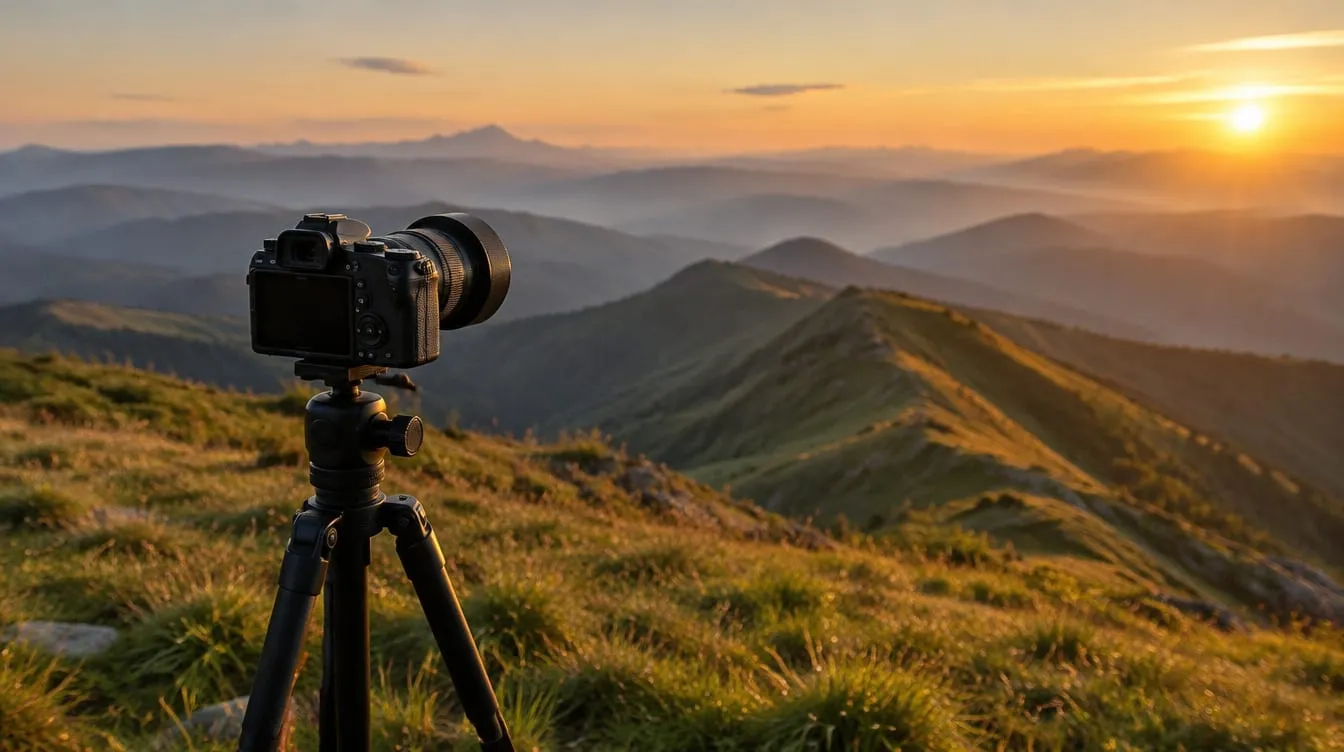
What focal length really controls, why it doesn't change perspective on its own, and how to pick wide, normal or telephoto by deciding where to stand first.
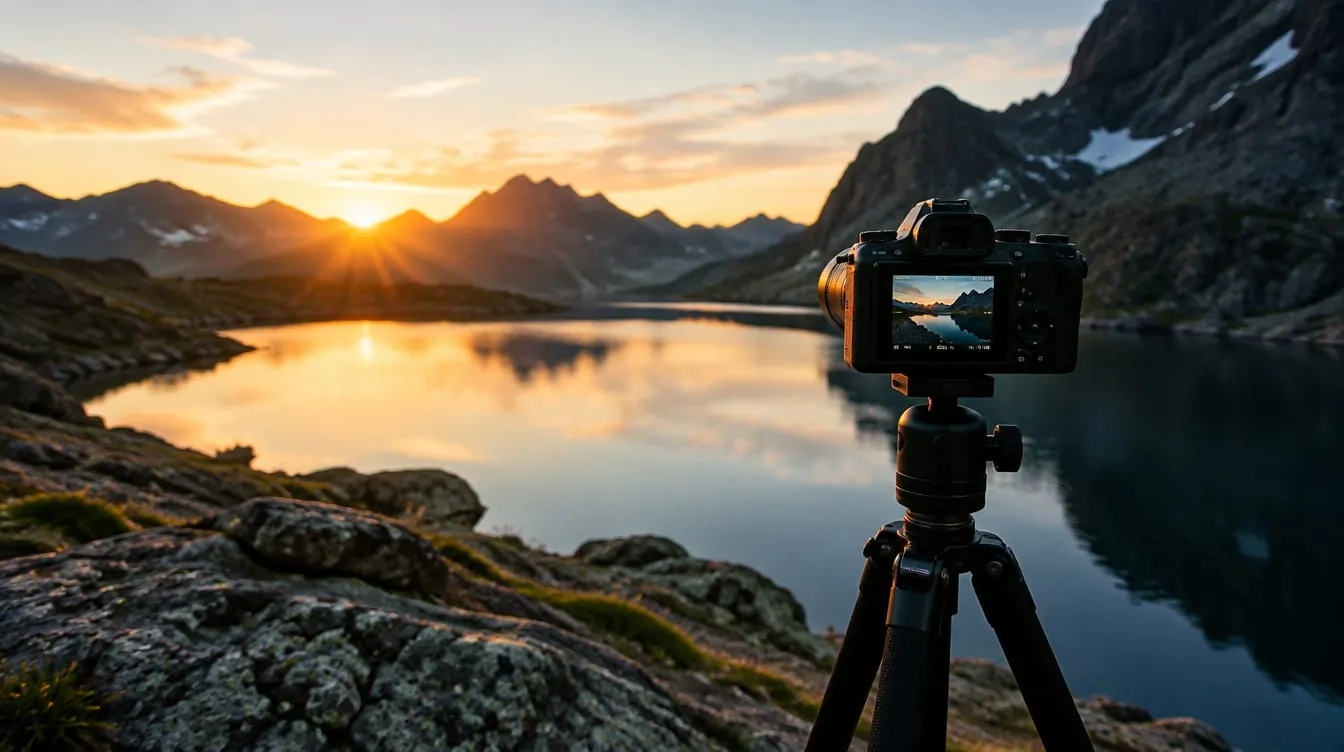
RAW vs JPEG explained: what each file really holds, when RAW rescues a shot, when JPEG is all you need, and why RAW+JPEG is often the smartest compromise.
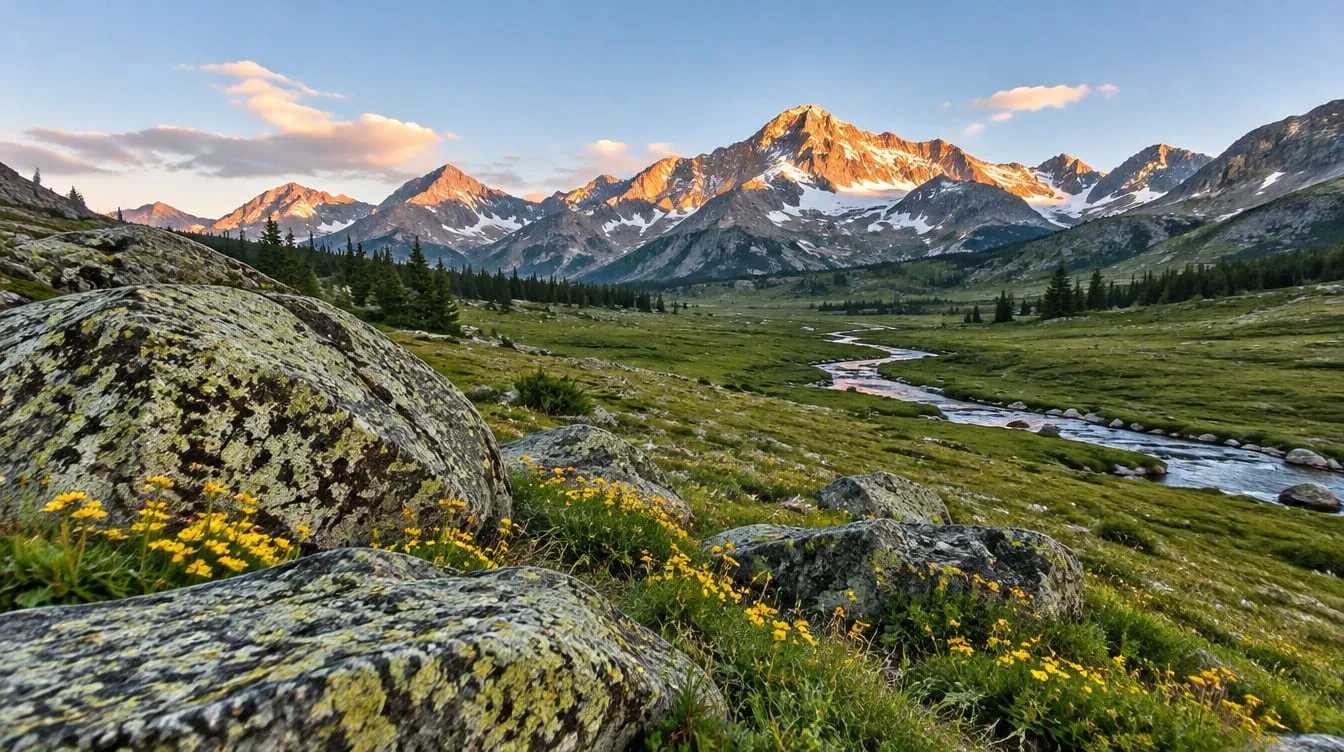
What hyperfocal distance is, how to find it with a ready-made chart, and where to focus in a landscape so both the foreground and the mountains come out sharp.
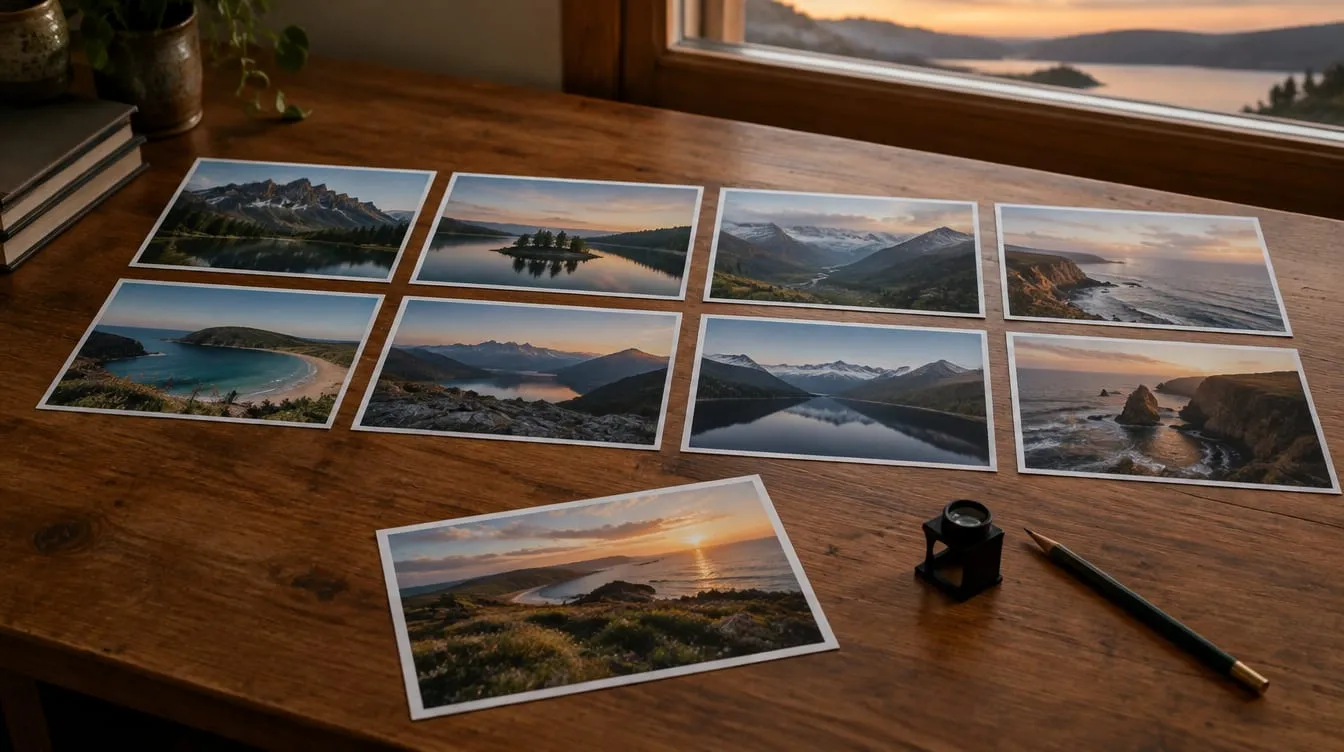
What a 62 out of 100 really means, how a photo score is built from six criteria, and which category to work on first to raise it, with a 30-minute exercise.
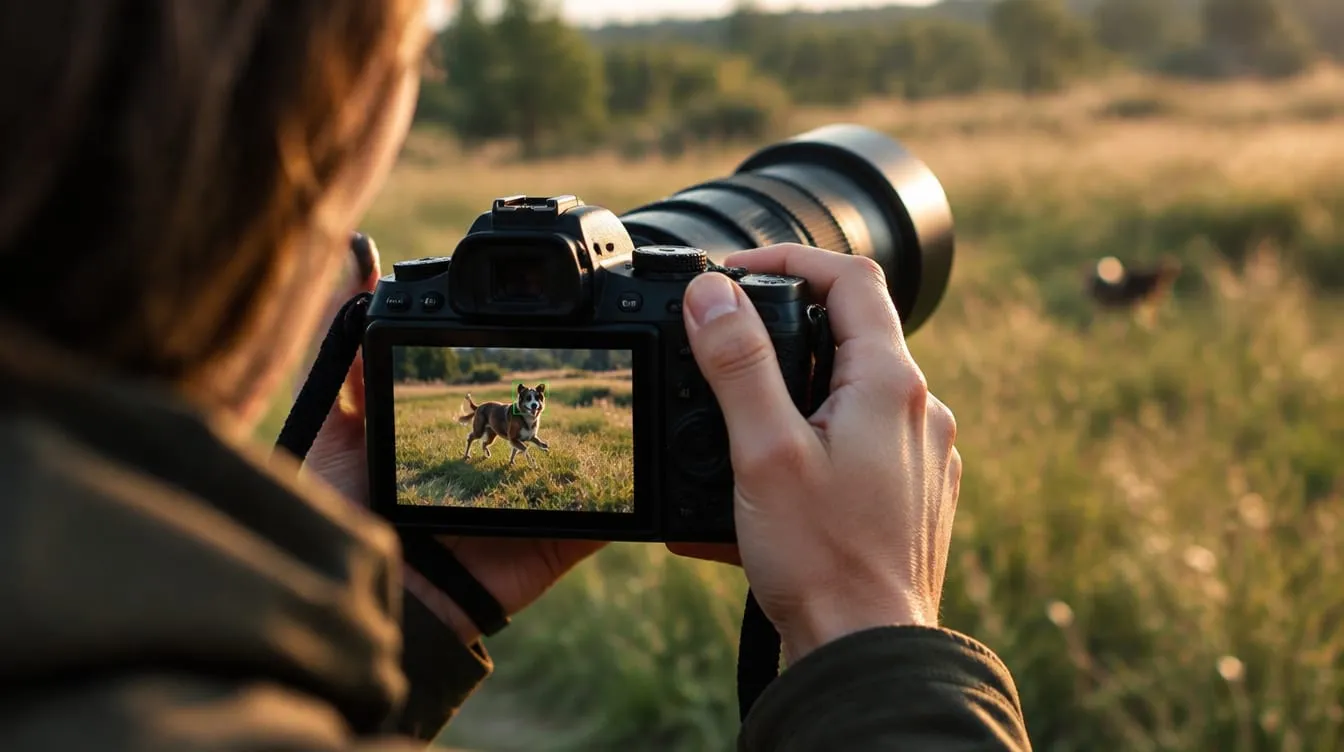
AF-S, AF-C or AF-A? Which autofocus mode to use for landscapes, portraits and moving subjects, how to pick an AF area, and a 20-minute test to prove it.
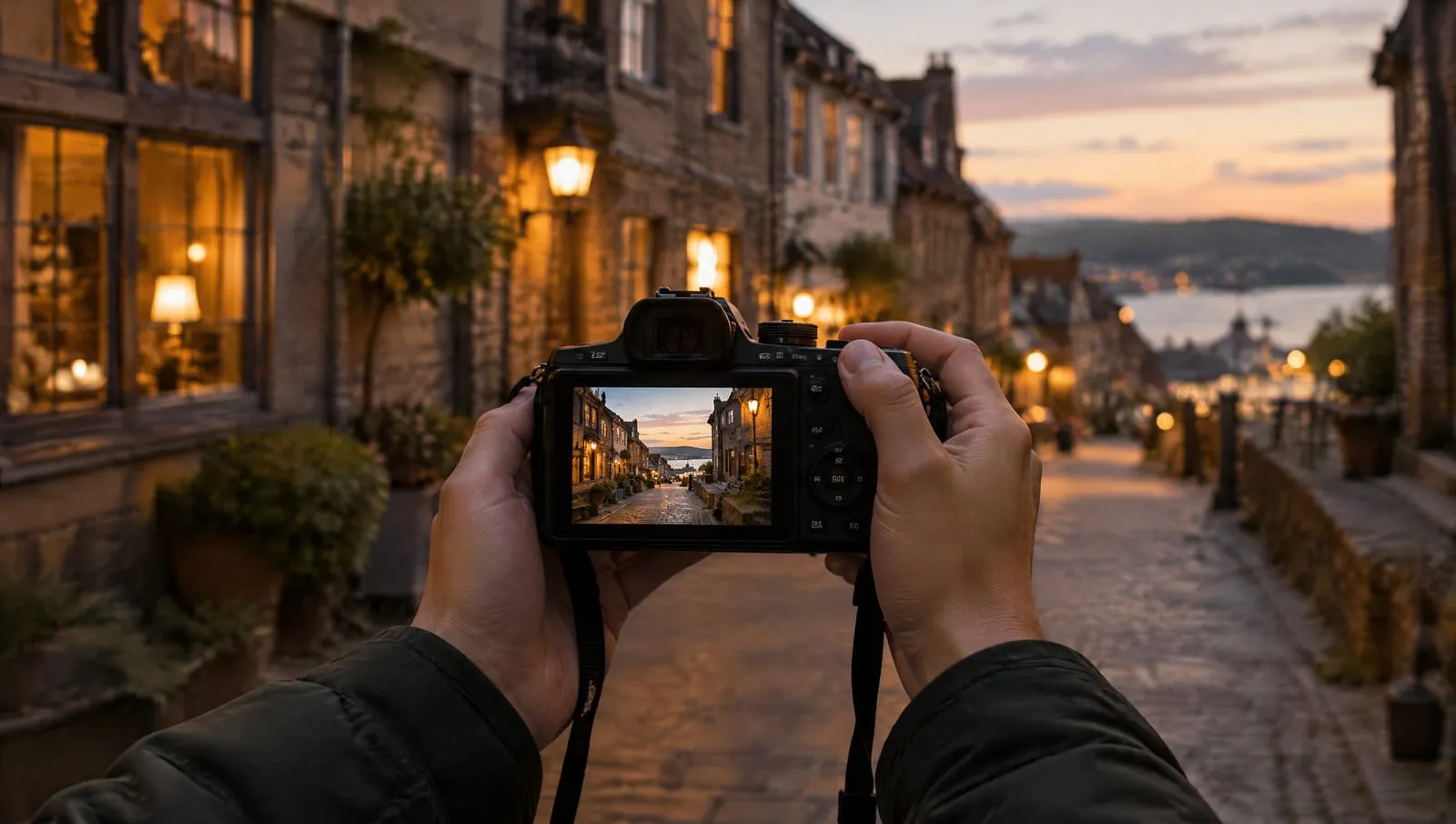
Find out if camera shake or subject movement is blurring your photos: a 100% crop test, shutter speeds to use, bracing tips and a drill to find your limit.
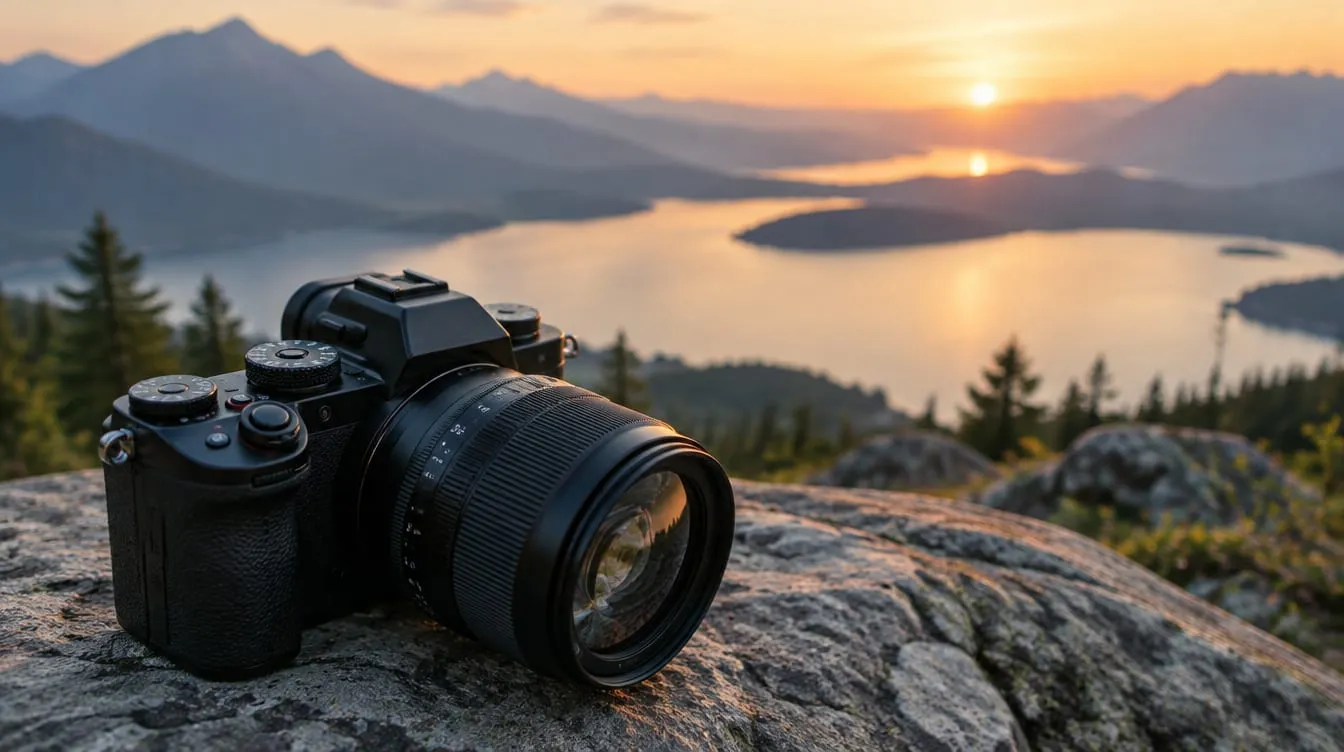
The exposure triangle explained through stops: what aperture, shutter speed and ISO each do, how to balance them and which to set first. With tables and a test.
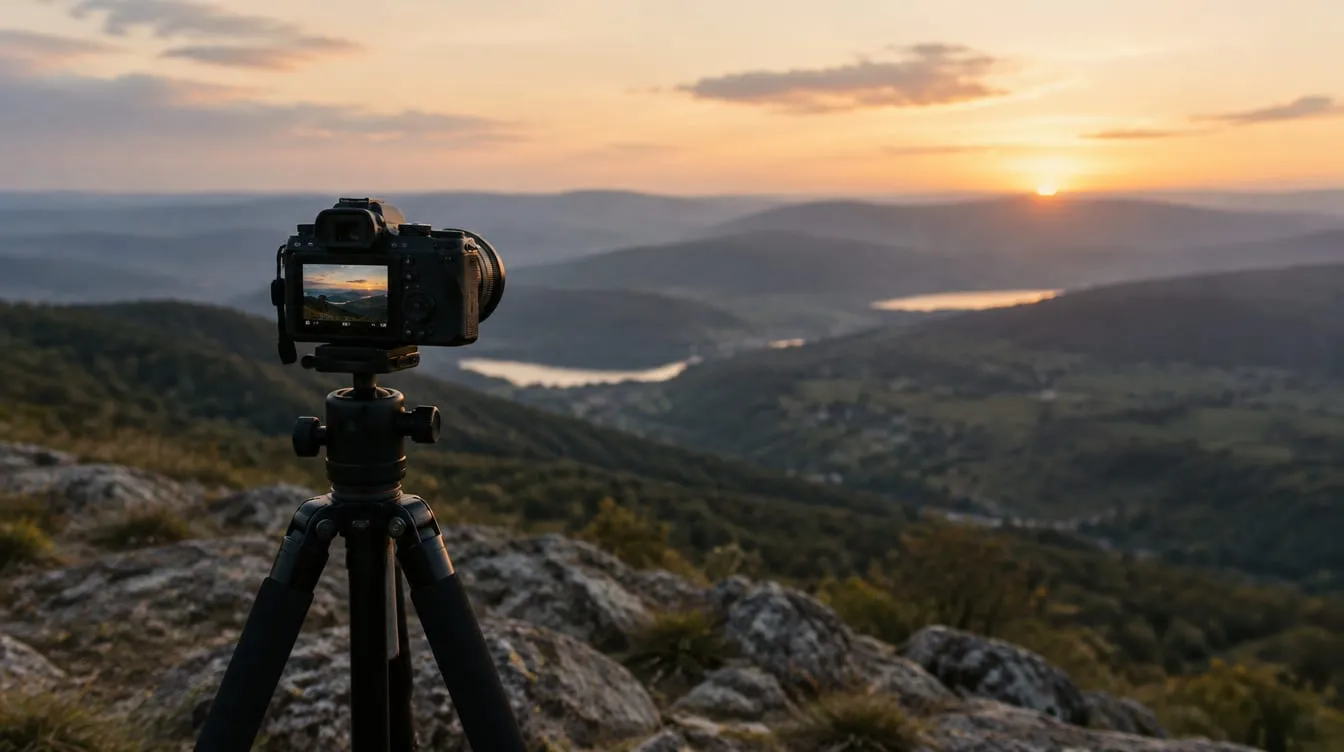
Read your camera's histogram with three quick checks: edges, position and width. Learn when a spike is a mistake, when it is intended, and what to adjust.

Autumn photography ideas matched to the light and weather you actually get, from overcast to backlit leaves, with starting settings and a one-week exercise.
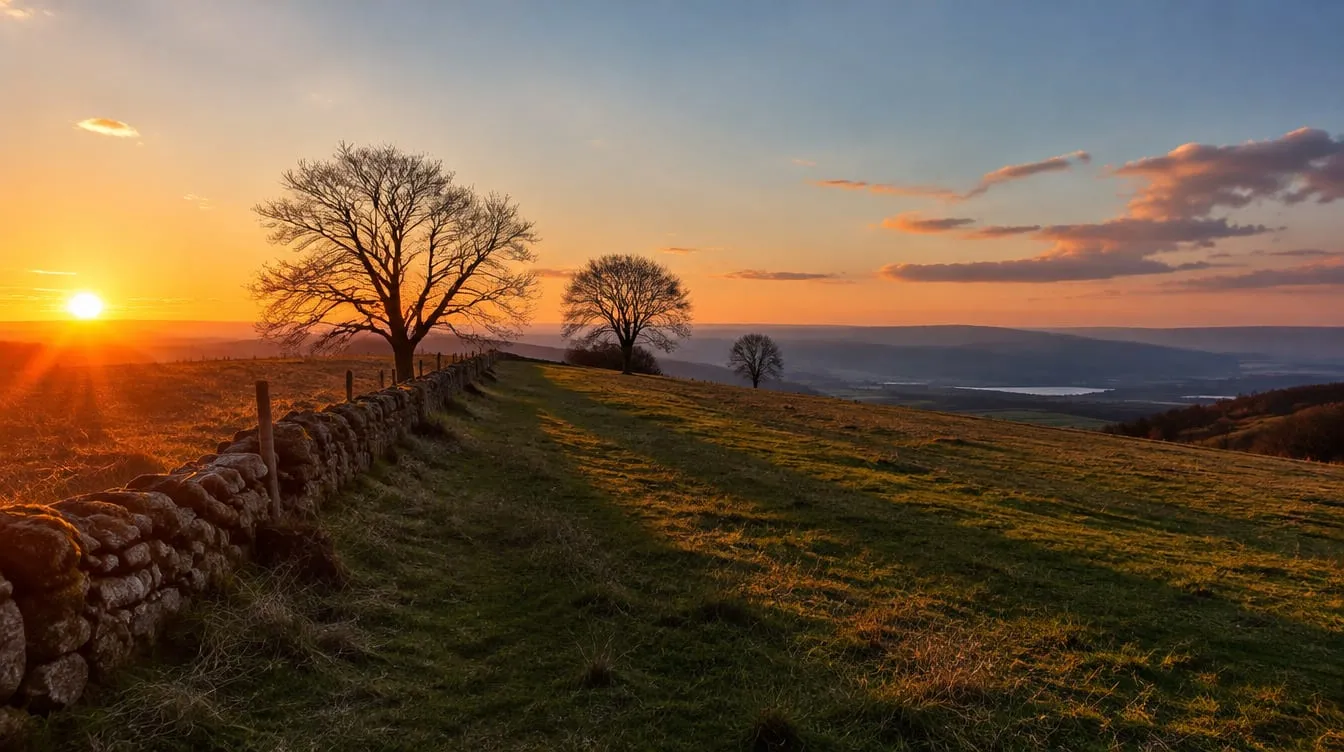
Sunrise vs sunset photography: the light is similar, but sun direction, air, crowds and effort differ. How to choose for your subject, plus a one-week test.
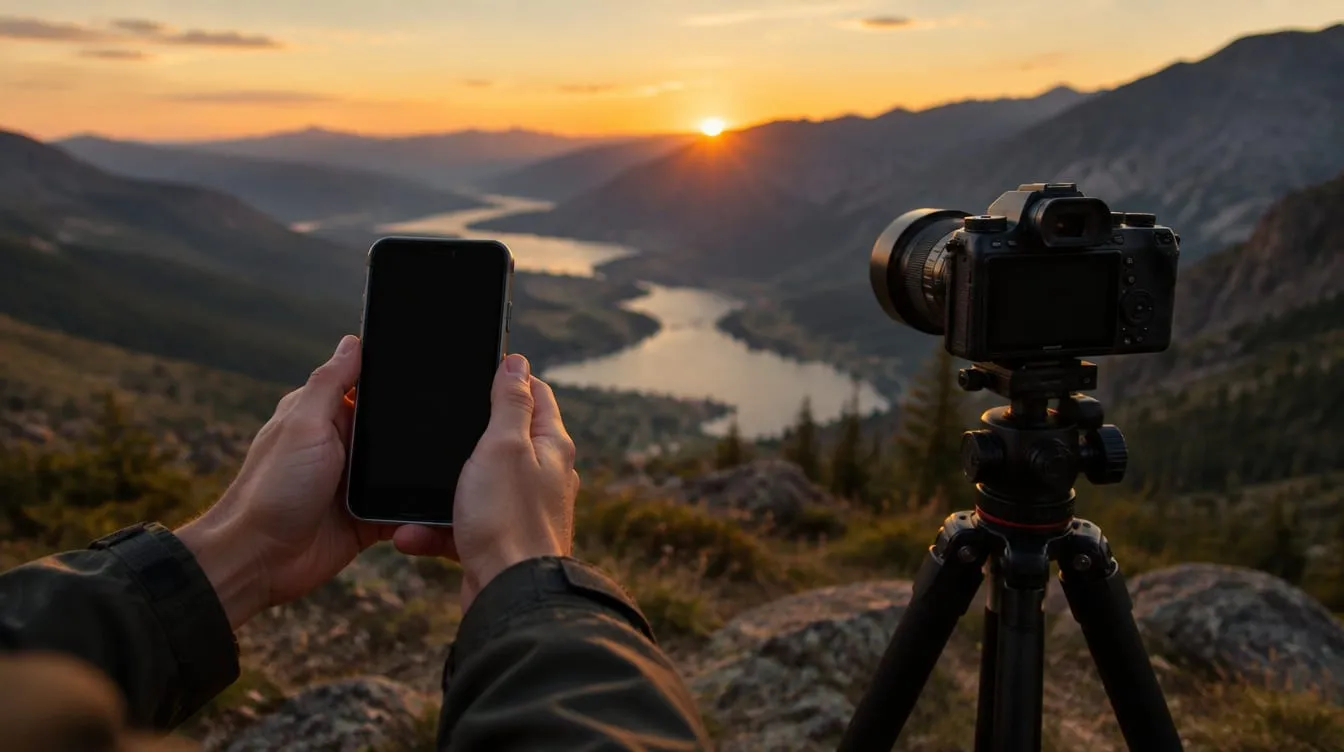
Which app should you use to plan light? PhotoPills, The Photographer's Ephemeris, SunCalc and more compared, with a table by need and a 20-minute field test.
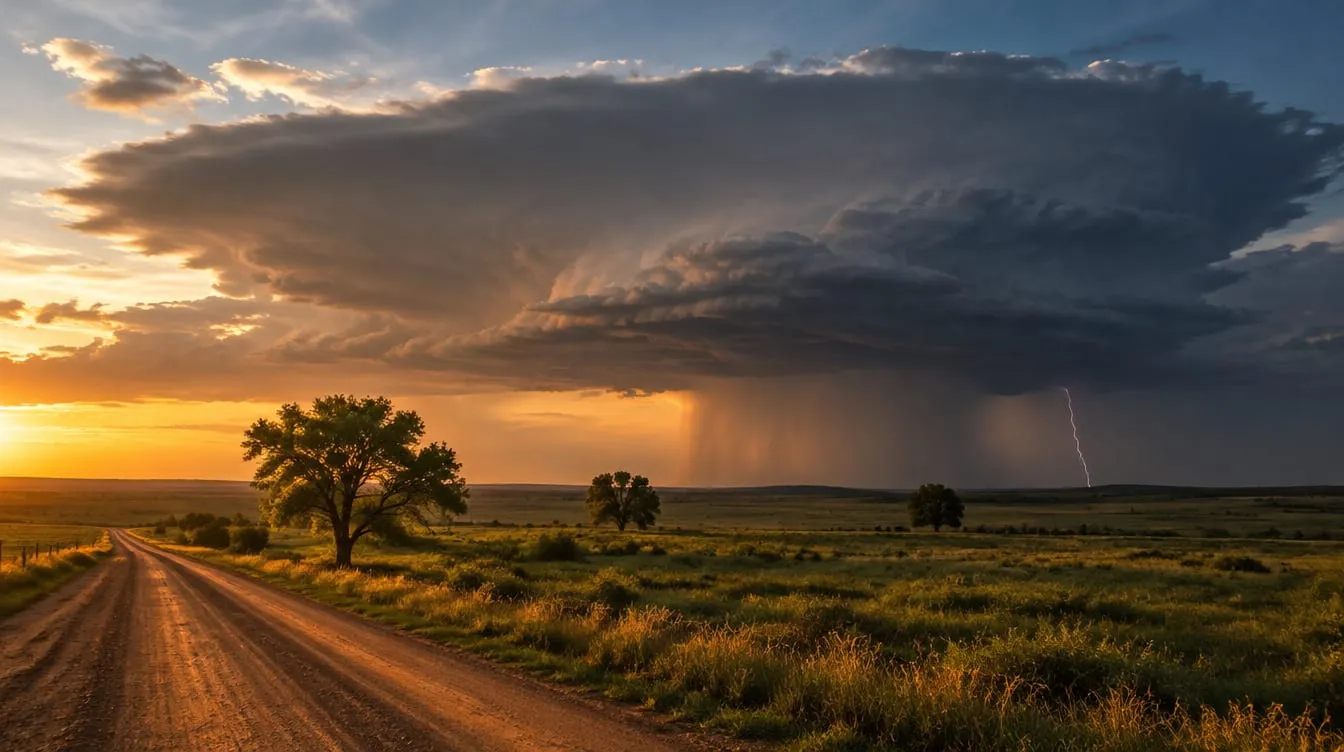
Storm photography without the risk: when to go indoors, how far to stay, what settings to use by day and night, and how to compose a dramatic sky.
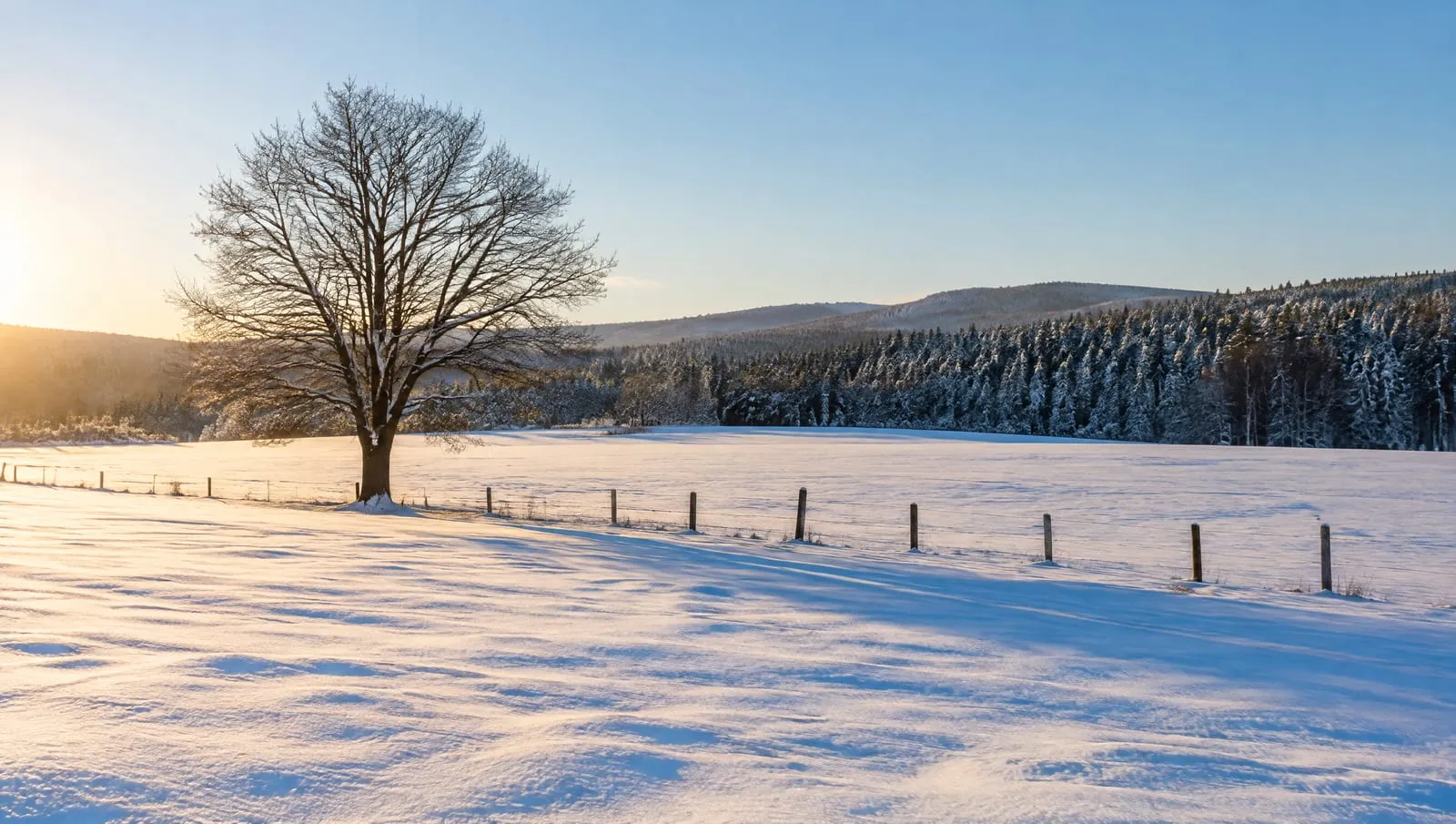
Snow photography: why your meter turns snow gray, how much exposure compensation to use (sources differ), how to read the histogram and fix blue snow.
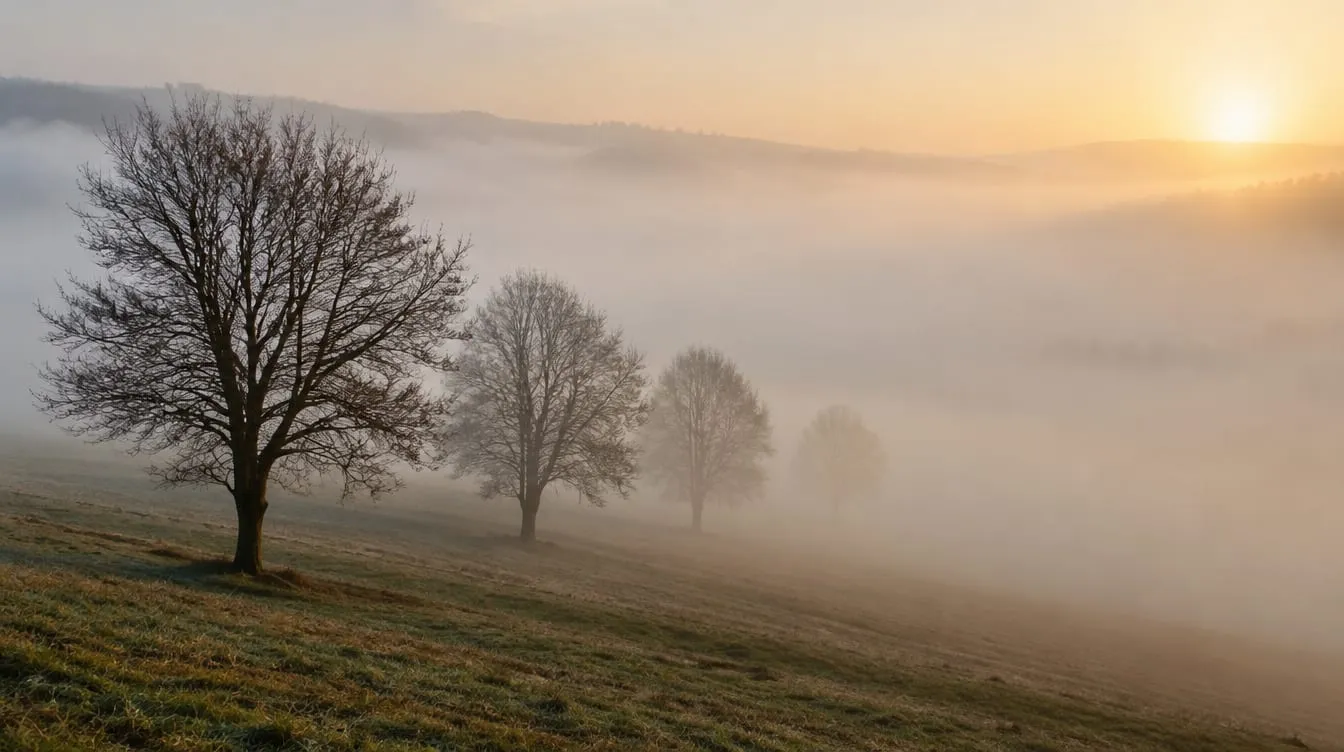
Fog photography made simple: why your meter turns fog gray, how much exposure compensation to use (sources disagree), how to focus and build depth in layers.
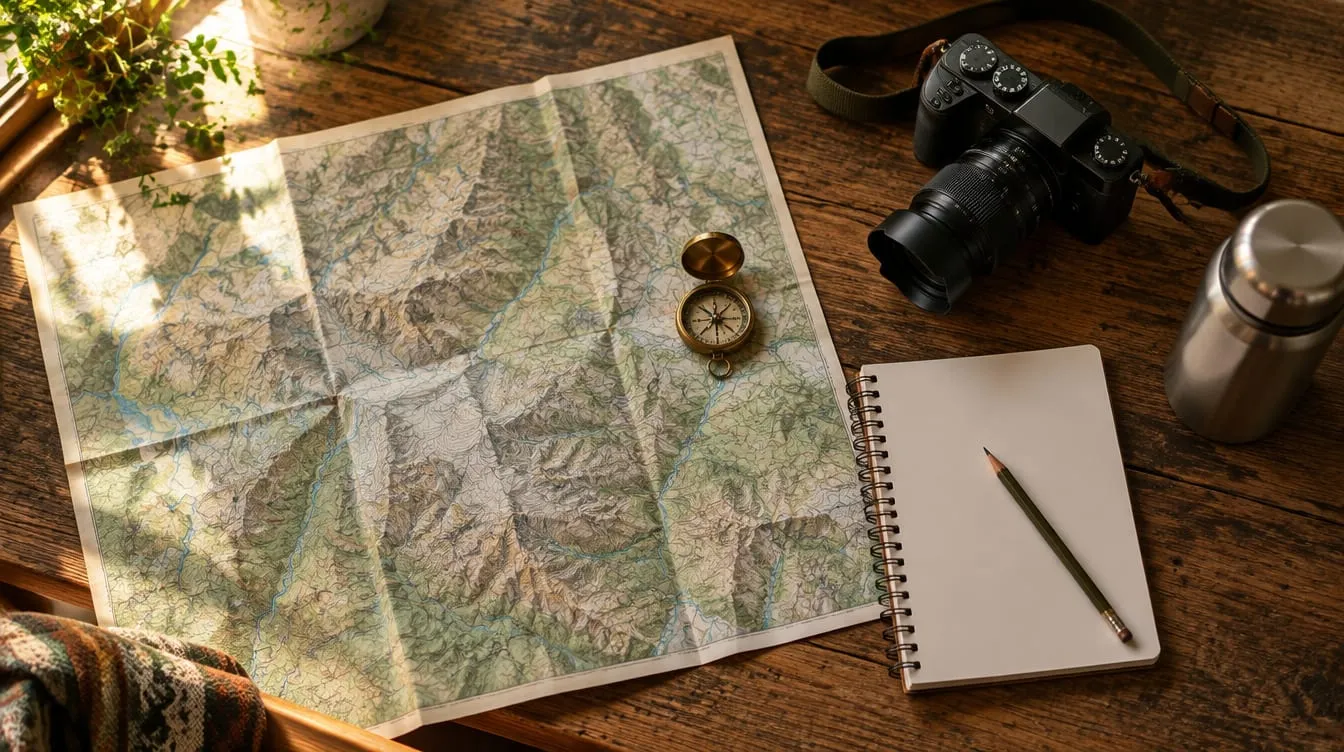
How to plan a photography trip or day outing: choose the subject, track the sun, check the weather three times, keep a plan B for gray skies. Free PDF planner.

Harsh midday sun doesn't have to ruin your shots. Six fixes, from exposing for the highlights to using a polarizer, plus a one-hour exercise to try them.
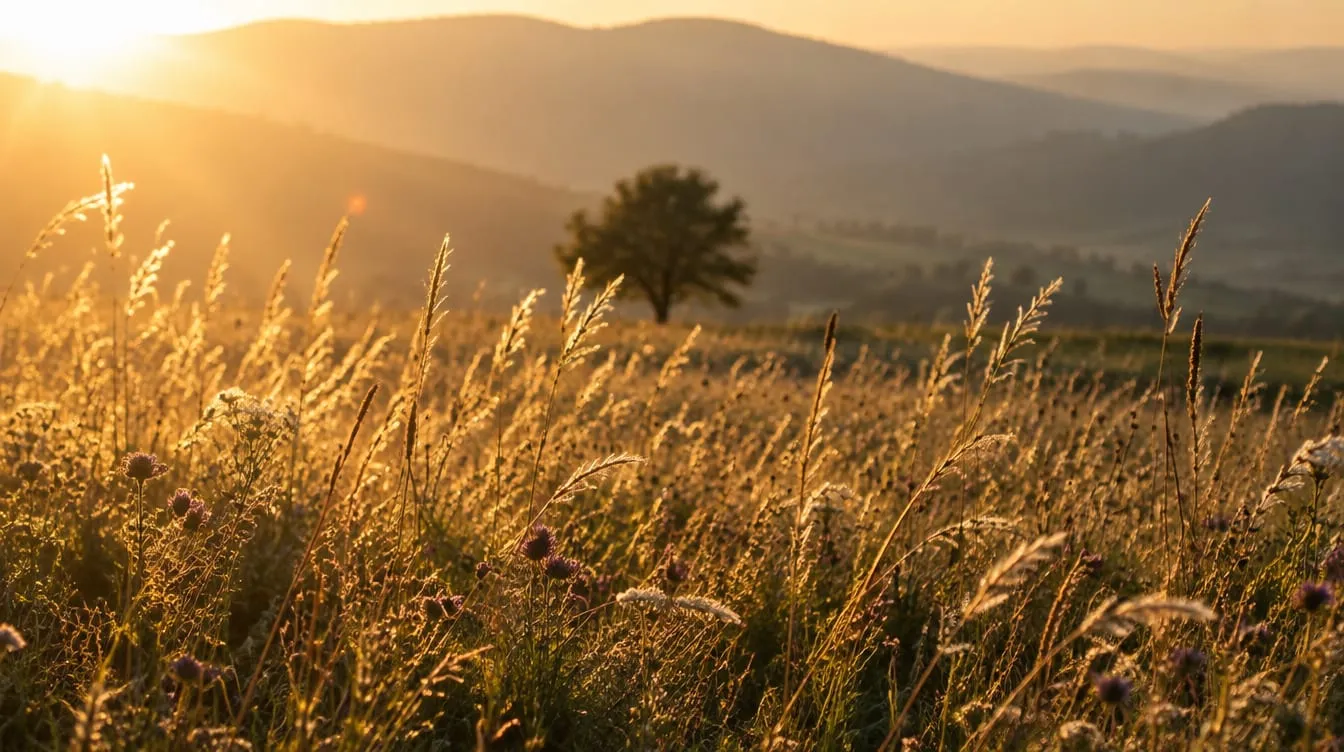
Shooting into the light fools your meter and darkens the subject. Decide what to protect (sky, subject or both), then use spot metering, compensation and fill.
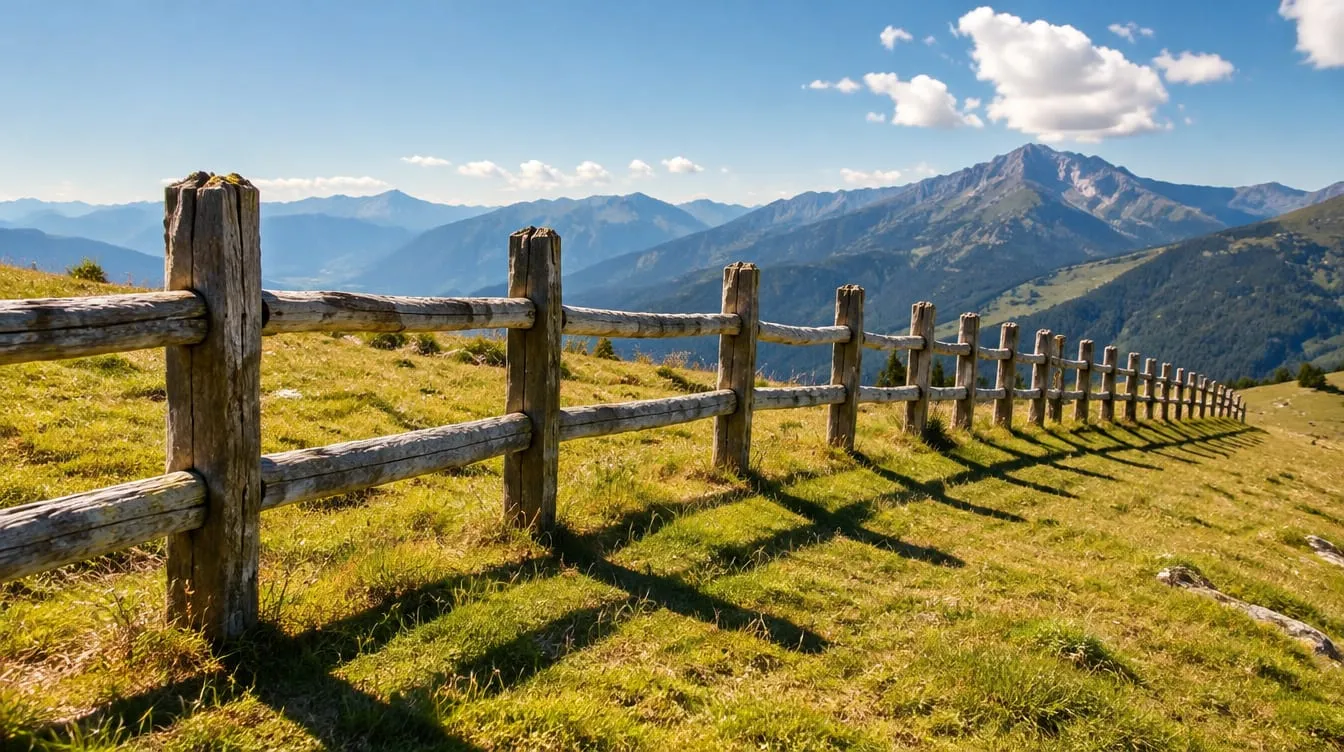
Hard vs soft light comes down to how large the source looks from your subject, not how strong it is. How to tell them apart, a 1/100 rule, and when to use each.
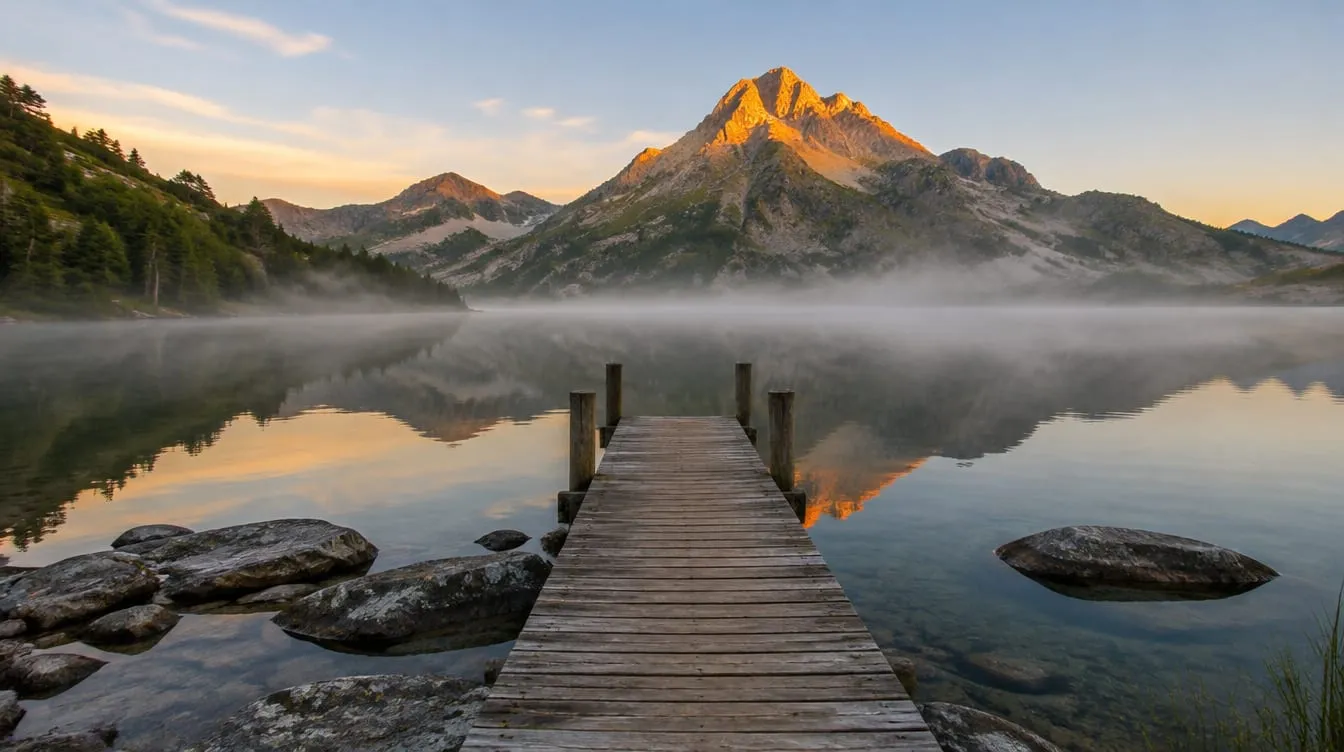
How to improve a photo while you are still on location: three shots, one fix at a time. A method to spot the main flaw and change only what matters.
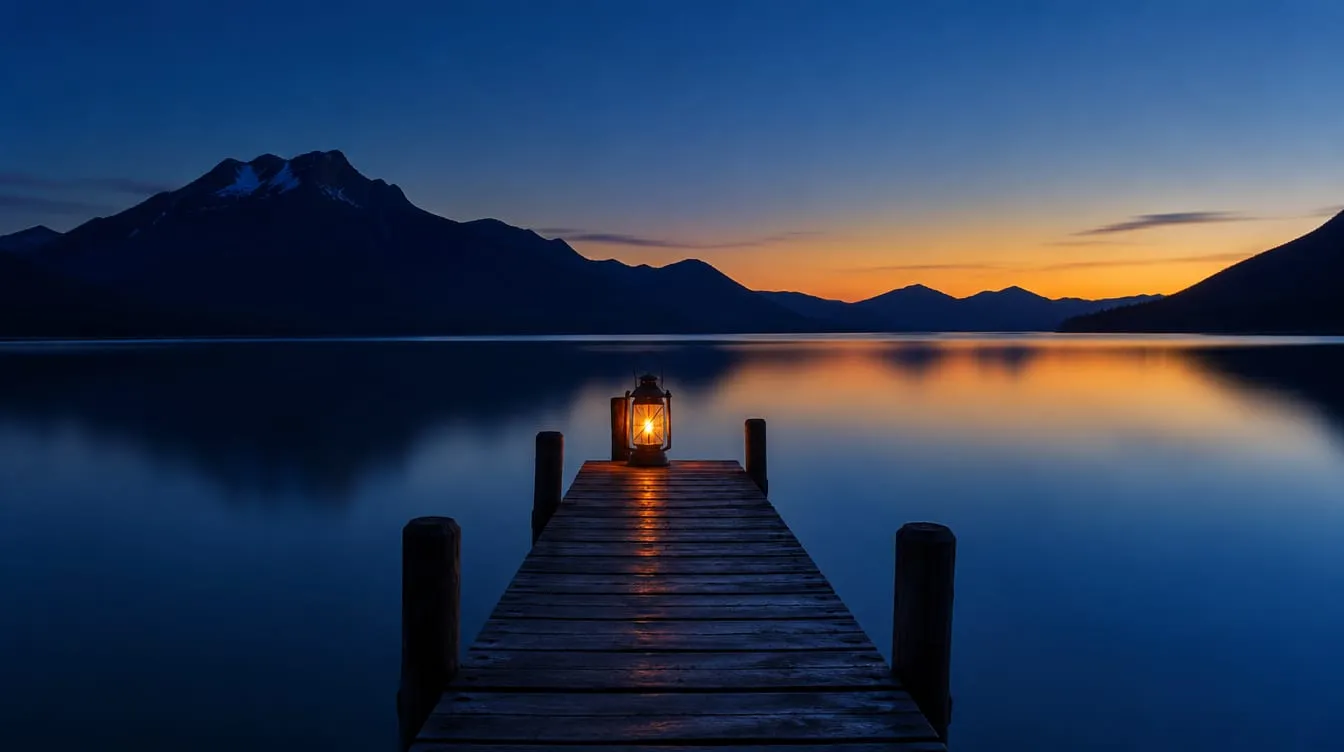
Blue hour photography: when it starts, how long it lasts and how to keep noise down. Tripod, shutter speed, exposure and a one-evening test on your own camera.
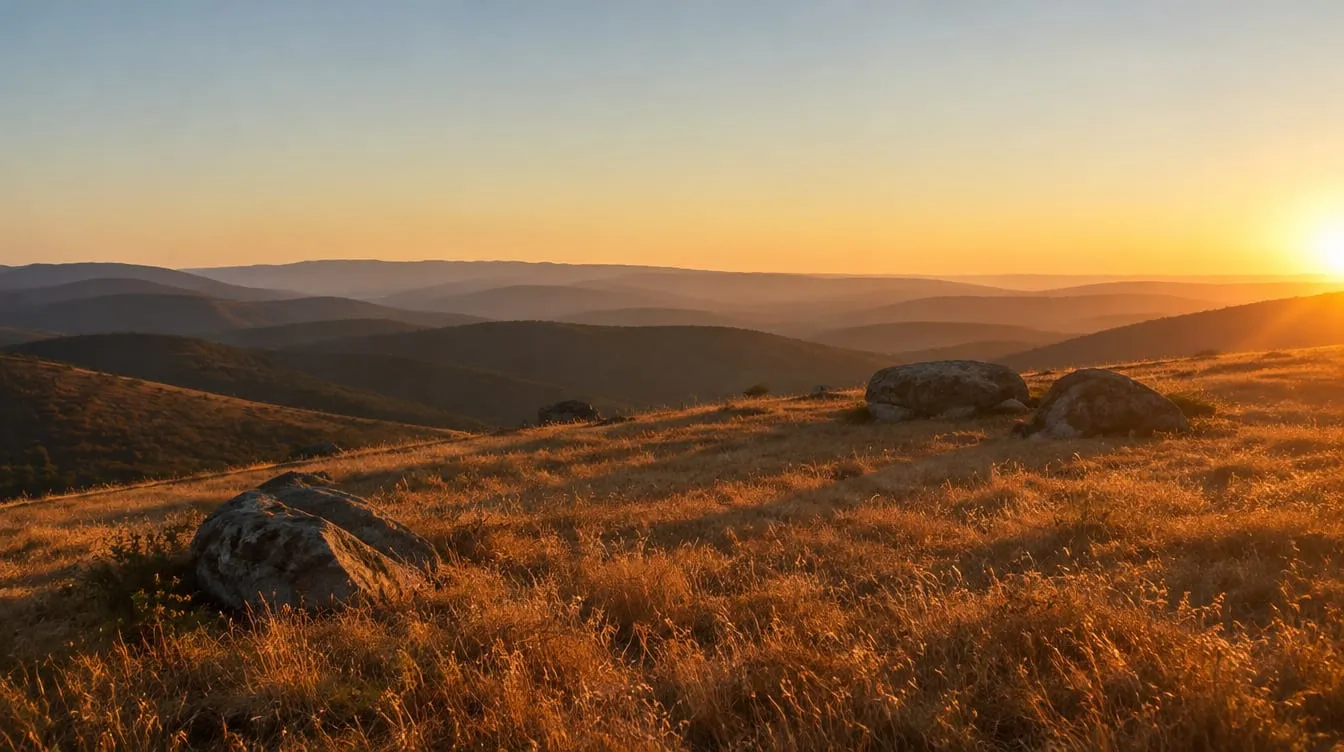
Golden hour is not a fixed hour but a height of the sun. Spot it with your shadow, learn how long it lasts in your season and expose without blowing highlights.
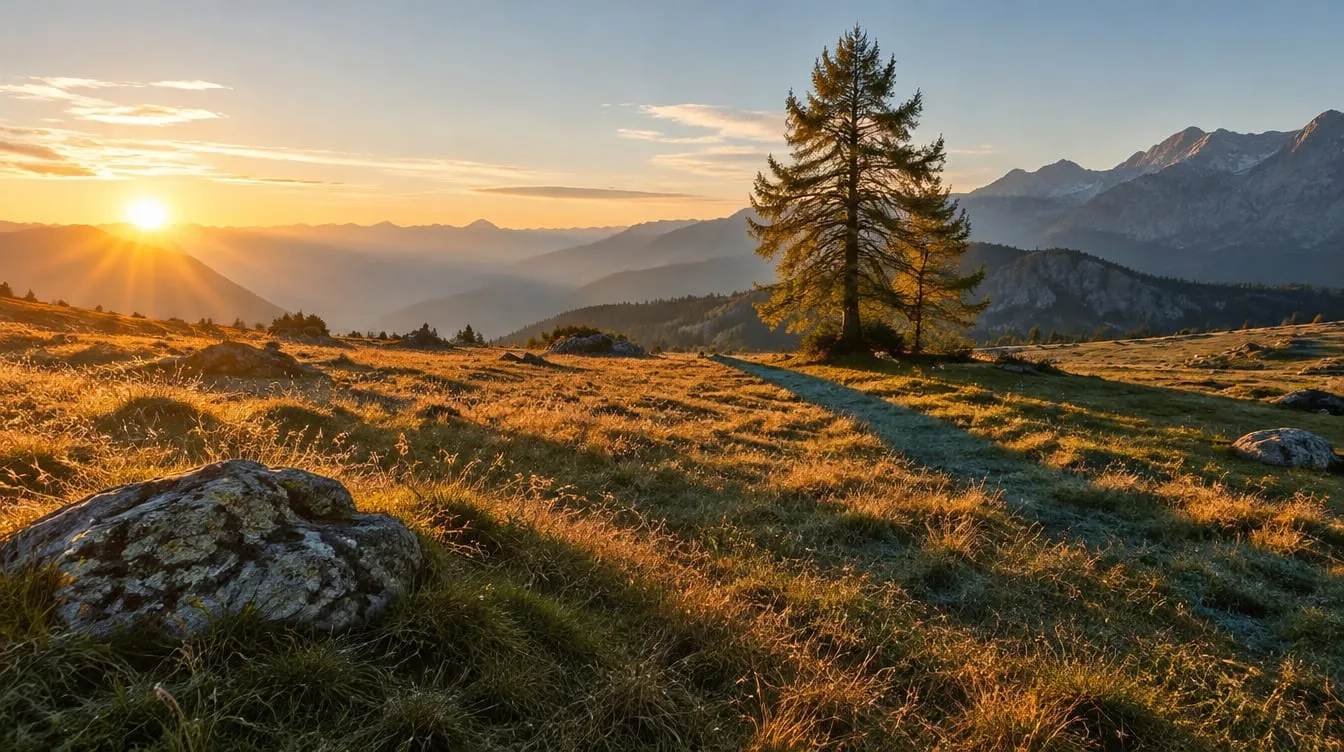
Learn to read light in photography with four questions: direction, quality, color and contrast. With tables, a shadow test and an exercise for your next outing.
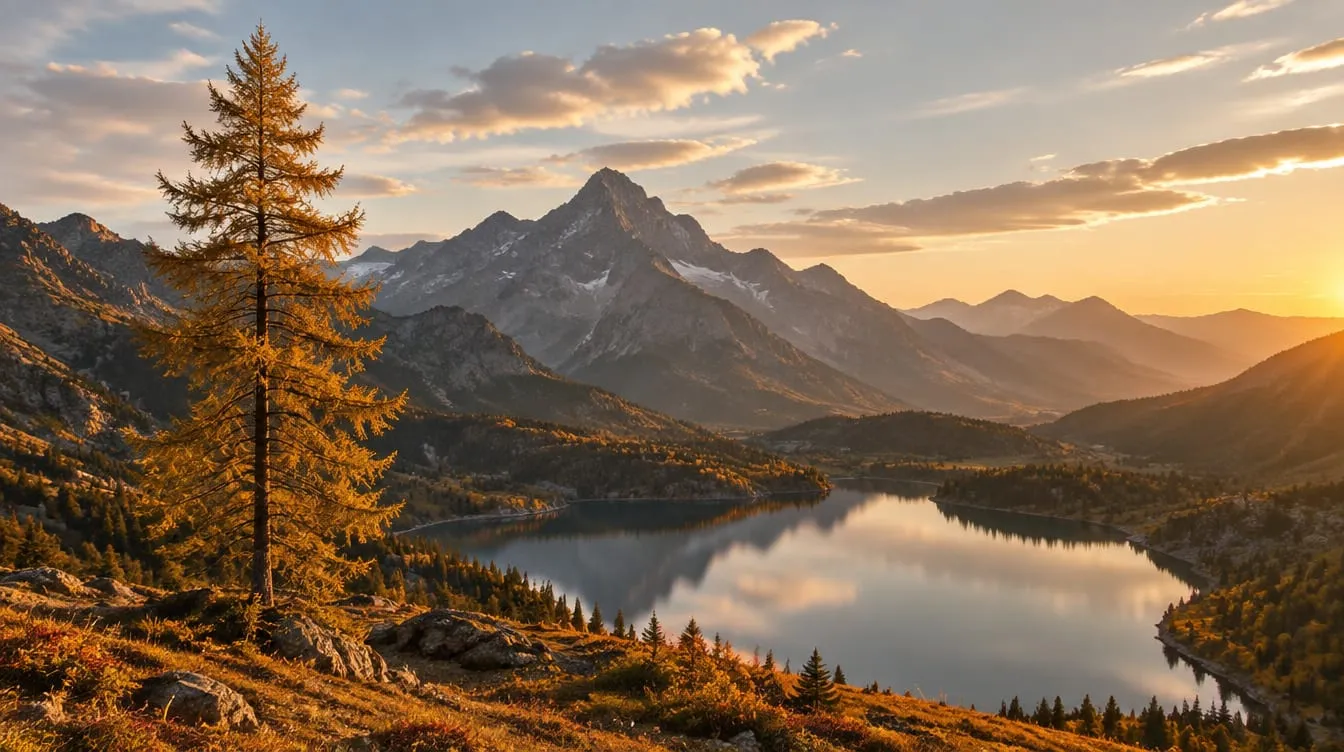
Vertical or horizontal? Read the dominant direction of a scene with four quick questions and pick the right orientation without memorizing rules.
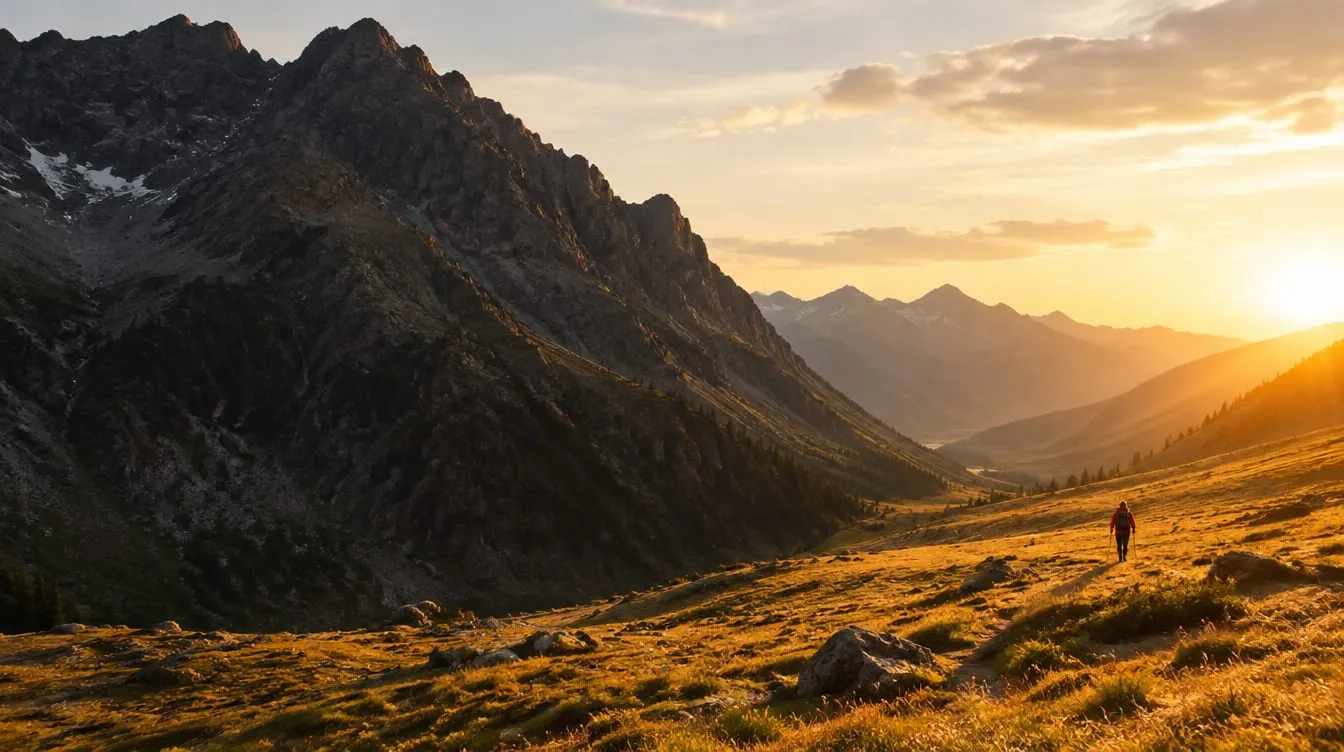
Visual weight is how hard an element pulls the eye. Find the heaviest spot with a three-step squint test, then rebalance the frame with four simple levers.
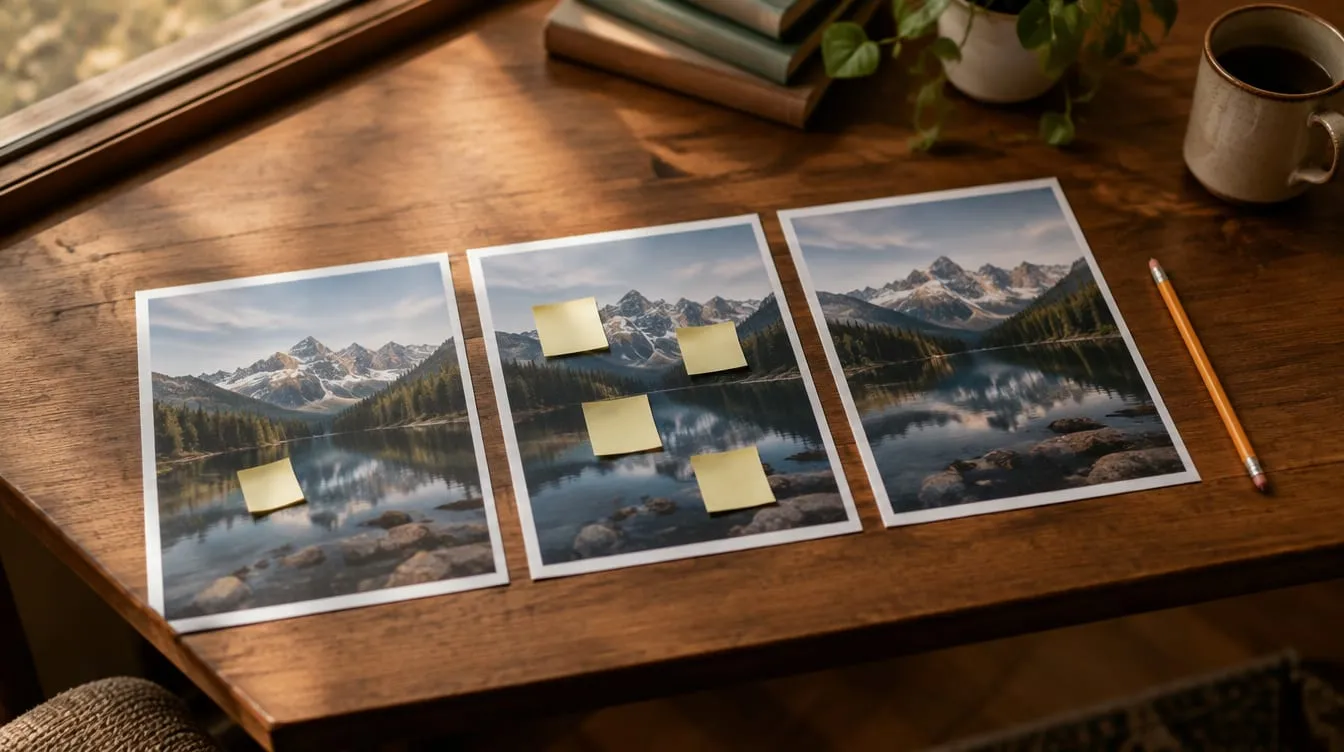
Photo feedback from forums, Facebook groups, camera clubs or AI: what each gives you, where it falls short, and how to pick one for your question.
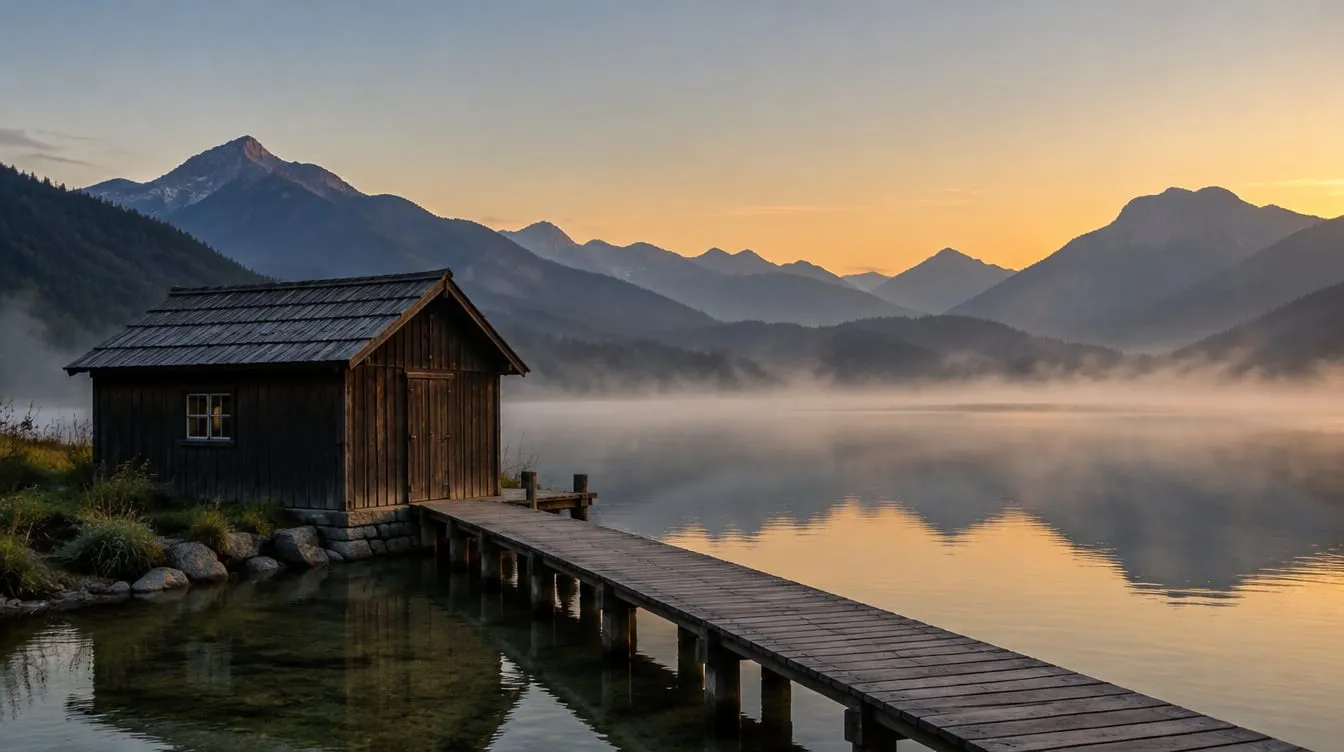
The 12 composition mistakes that ruin the most photos, sorted into four 30-second checks, with a fix for each and the cases where they are deliberate choices.

A natural frame only works if the subject wins over it. Three checks, how to expose a scene with a dark frame, how to focus, and when to leave it out.
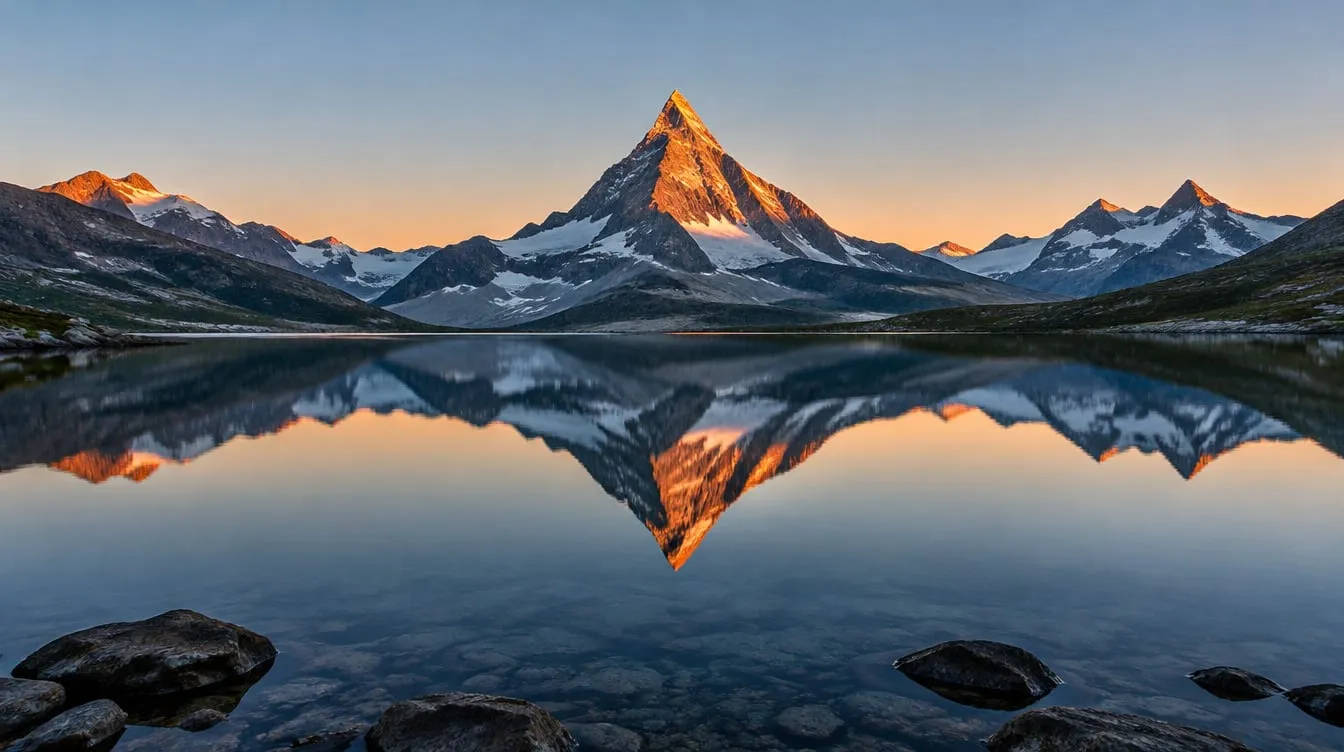
Symmetry only works when the axis is right. Three checks before you shoot, how to use reflections, and how to break the pattern on purpose with one element.
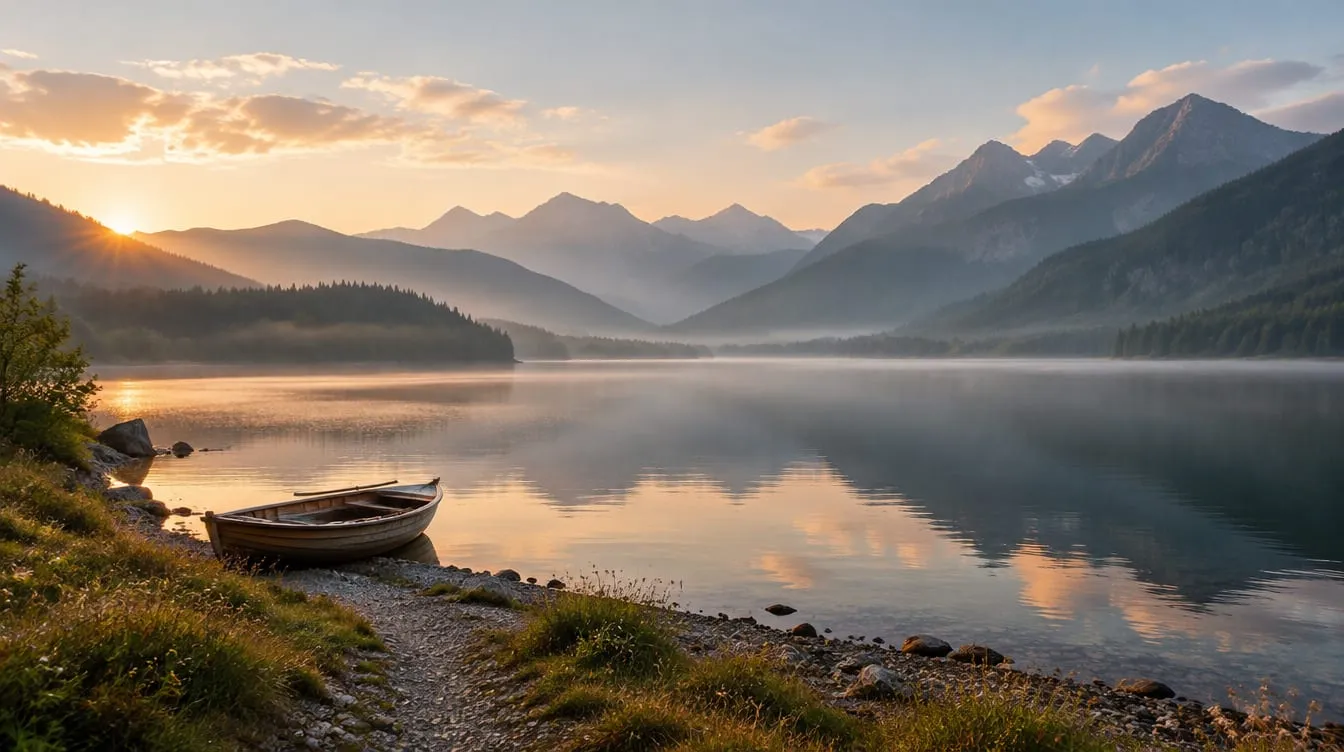
Photography composition as five decisions made in order: subject, subtraction, weight, path and frame. With tables, quick tests and a 30-minute exercise.
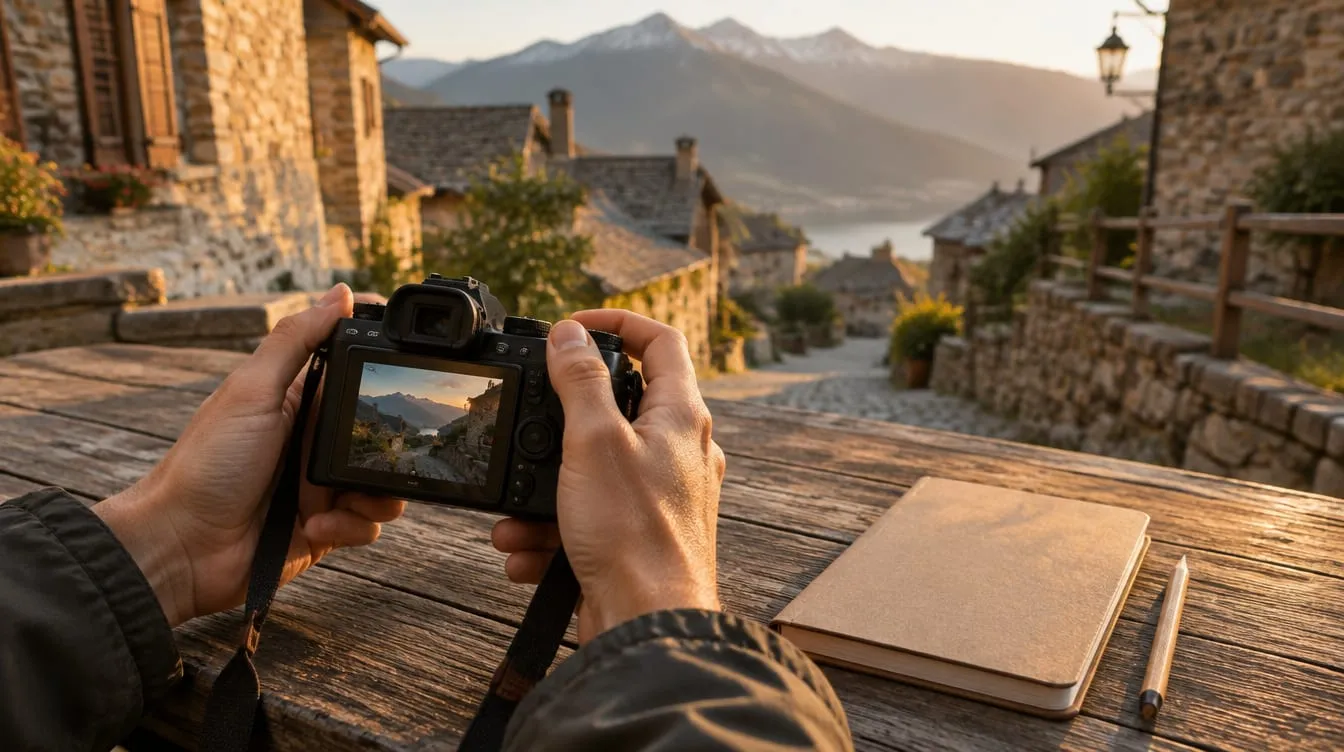
Photography composition exercises you can do in one hour, in one place: ten six-minute drills, each with a yes/no check that tells you if the shot works.
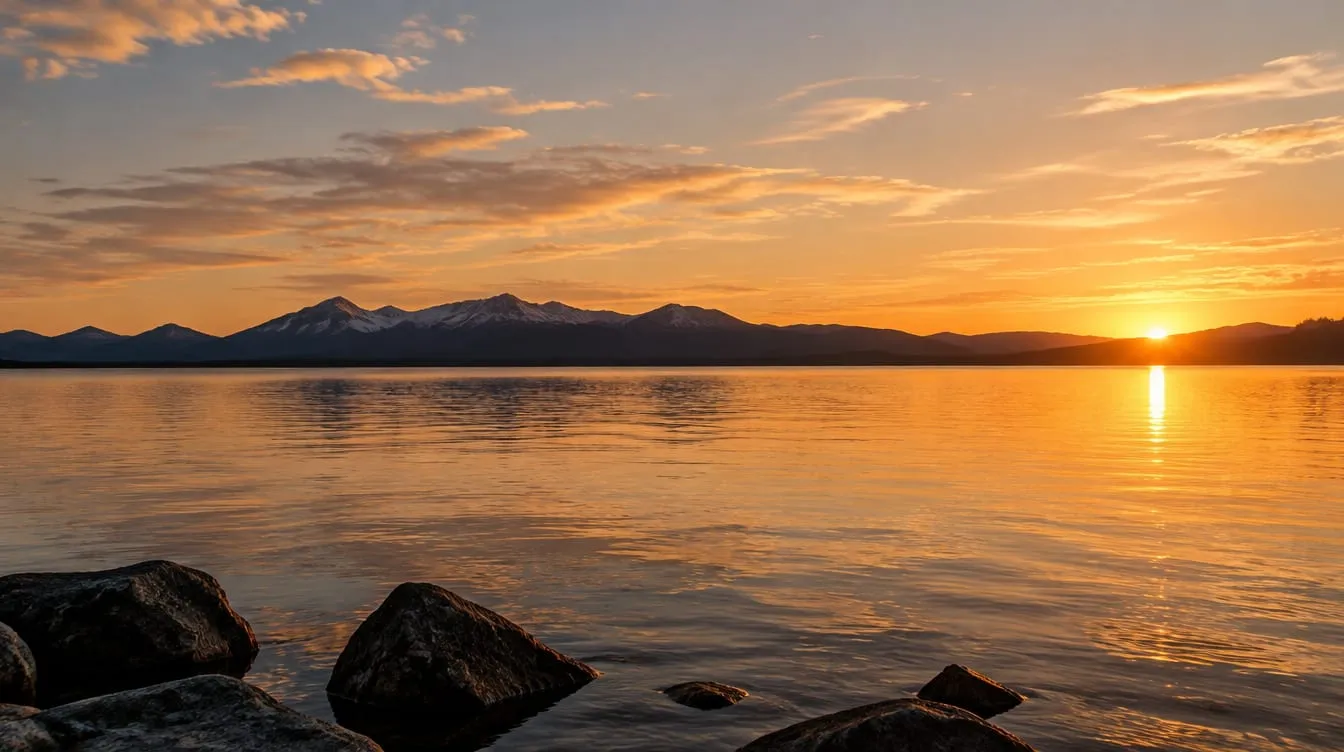
Where to put the horizon in a landscape photo: a two-crop test to choose between sky and ground, when the middle works, and how to keep the line level.
Apps to improve your photography do very different jobs: editing, shooting, planning or feedback. See which one fits your weak spot and which ones to skip.

Empty space only isolates your subject if it is doing a job. Three checks to tell live space from dead space, how much to leave and where to place the subject.
A random foreground makes a landscape worse. Three checks to know if yours works, how big to make it, what height to shoot from and how to keep it all sharp.
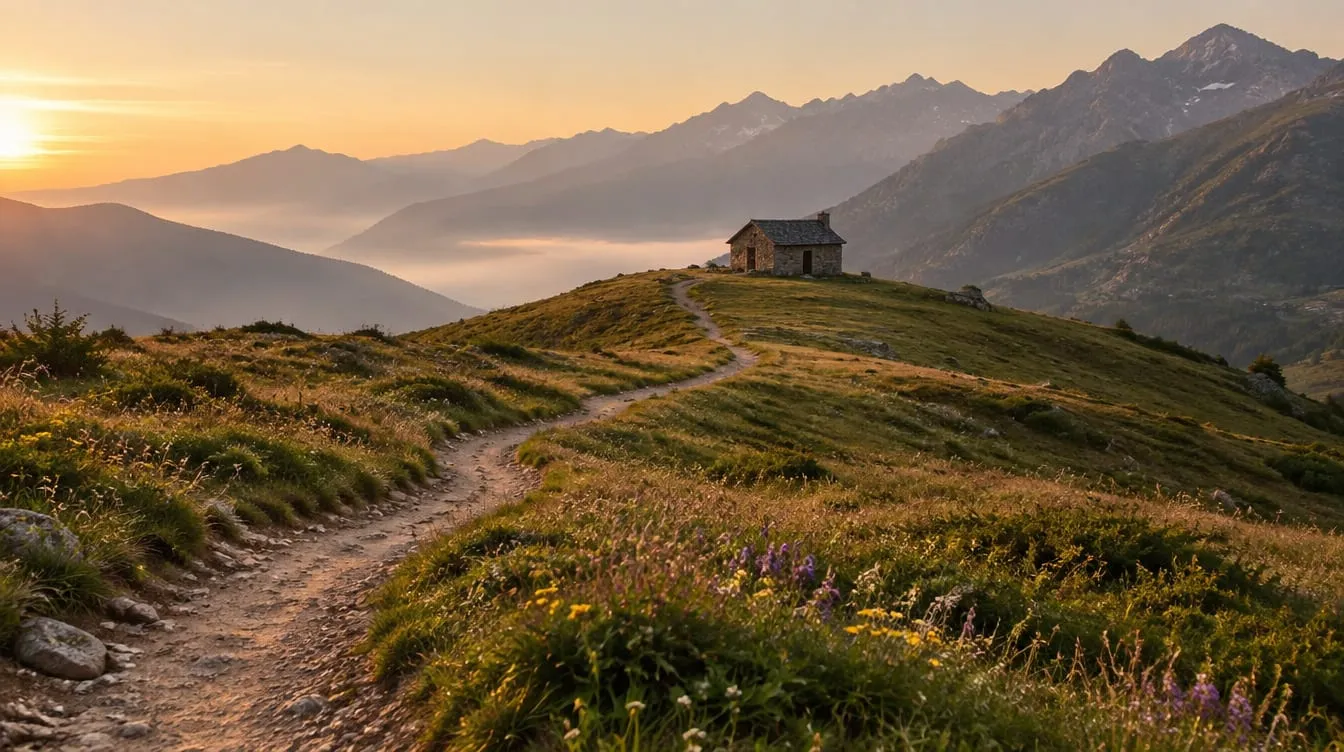
Leading lines in photography: the 6 types, where to put your subject, and 4 mistakes that break them. Includes a 3-check arrival test and a one-outing exercise.
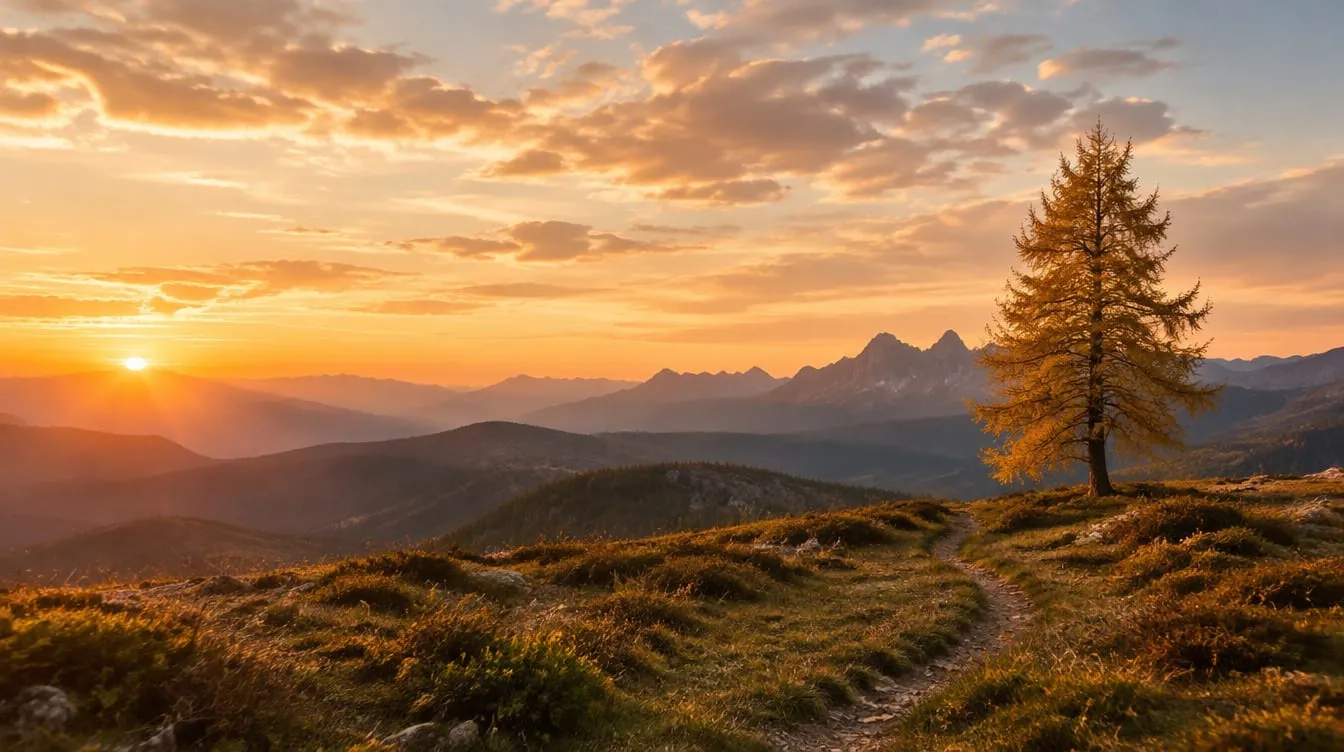
The rule of thirds in photography: where to put subject, horizon and lead room, plus 5 times to break it. Includes a 3-question test and a one-outing exercise.
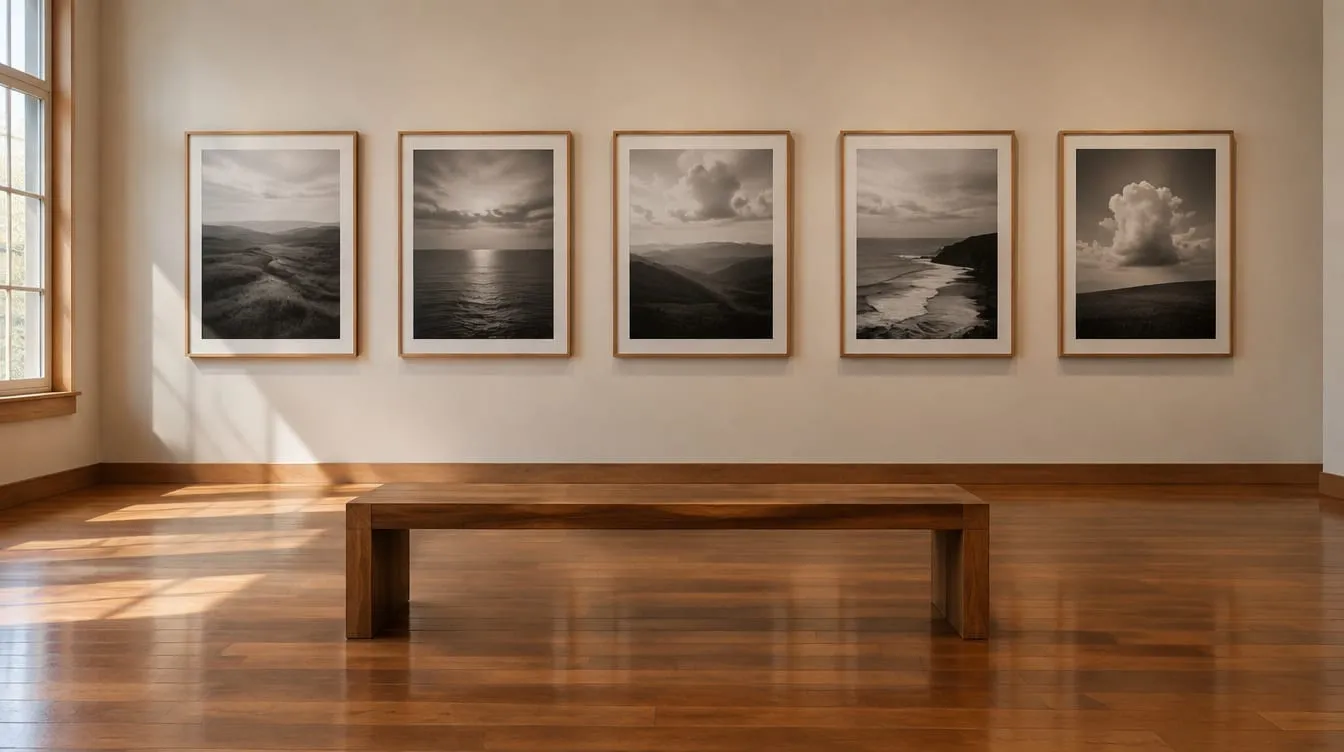
Five famous photographs read through the six criteria photographers use: what to look at in each, one habit to borrow, and an exercise you can do this week.

Back from a trip with hundreds of shots? A four-pass, 20-minute method to pick your best photos, choose between near-duplicates and know when to stop.
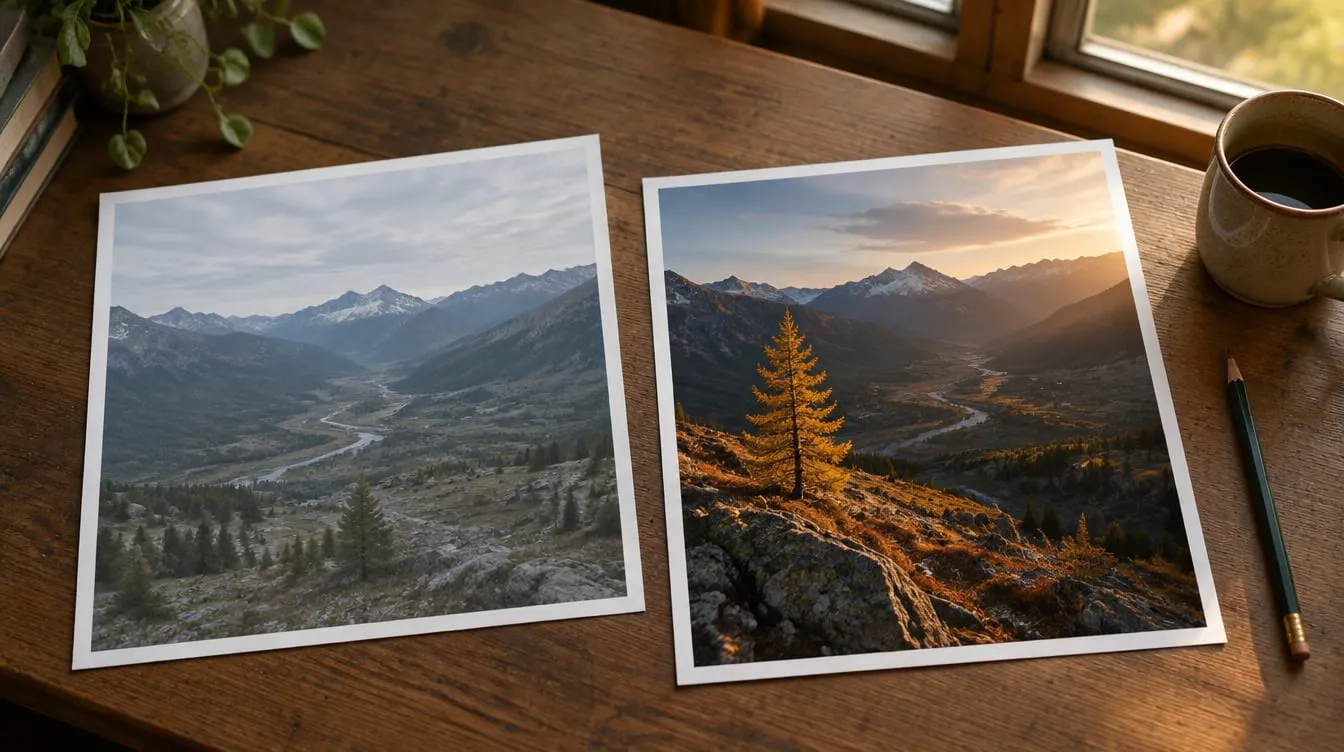
What really sets an amateur photo apart from a professional one? Eight differences you can see in the frame, each with a 10-second test for your own shots.

AI photo analysis is reliable on exposure and composition, less on emotion and intent. See where to trust it, where not to, and how to test it in 3 checks.
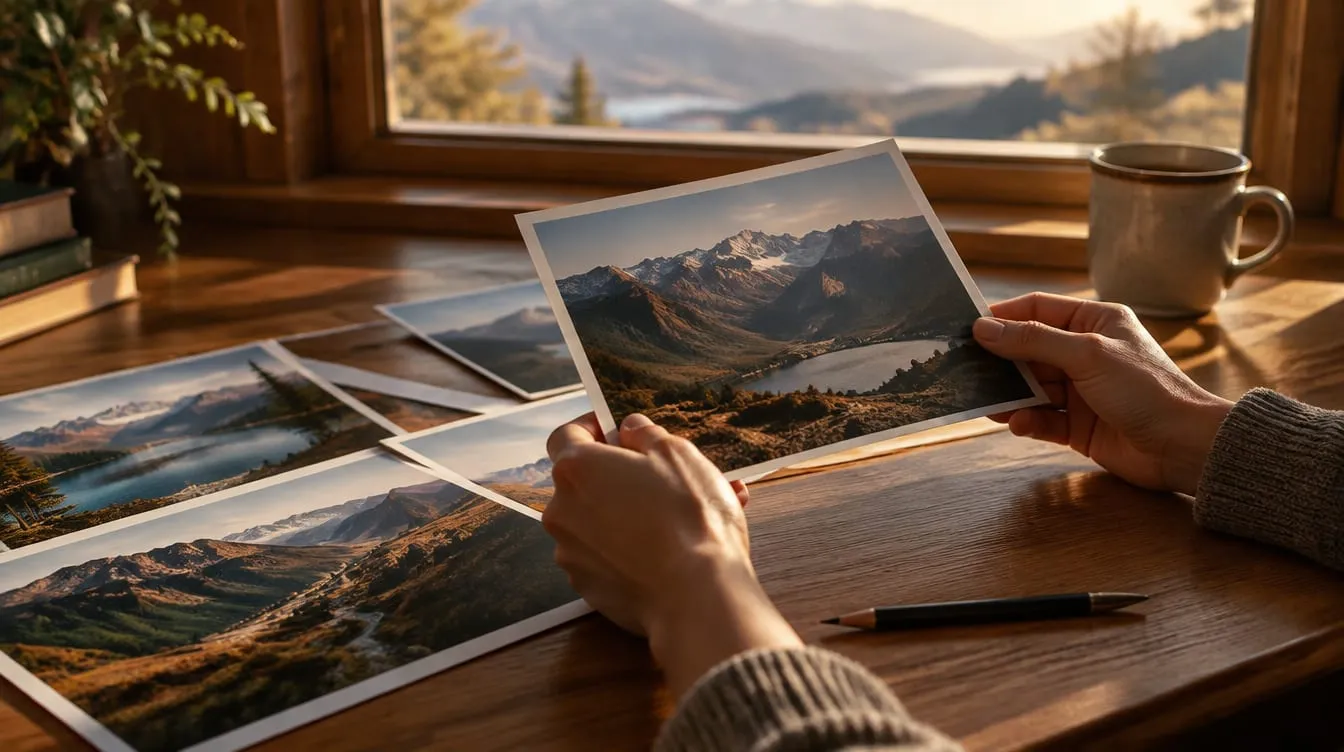
Get a photo critique you can use: a four-line brief, who to ask, how to sort comments into facts and taste, and which single change to make first.
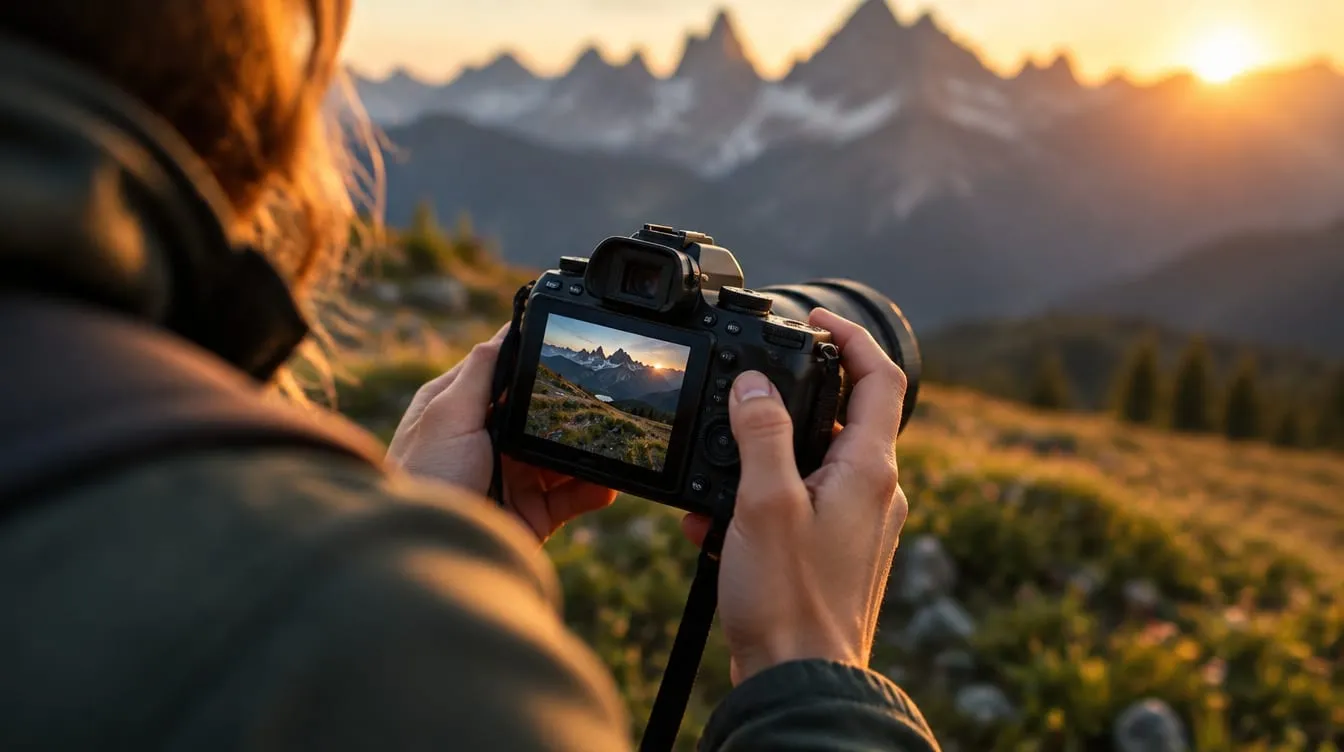
Stop asking "is it good?". Judge your photos with the 6 criteria experienced photographers use, a 0-100 scale and an exercise you can do today.
Photos looking flat and lifeless? Run four quick tests to find the cause (light, contrast, layers, angle) and fix it on your very next shot, no new gear needed.