Golden Hour Photography: When It Is and How to Shoot It
 by Marco Carotenuto · · 10 min read
You show up at the “right time” and the light is not what you pictured: too white, or already gone. The usual culprit is the name itself. Golden hour is not an hour and it has no fixed clock time. It is a quality of light that depends on how high the sun is above the horizon.
This guide covers what it is, why the light turns golden, how long it lasts in your season and how to recognize it in two minutes by looking at your shadow. Then the practical part: exposing with a low sun, where to stand relative to it, and what to do about color. If you want the big picture of light first, start with how to read light in photography.
What is golden hour, and why is it not exactly an hour?
It is the period just after sunrise and just before sunset when sunlight is warmer and more raking. The name is convenient but misleading: as timeanddate points out, it is a colloquial term with no official definition.
Sources define it in different ways:
| Definition | Who uses it | What it means in practice |
|---|---|---|
| The last hour before sunset and the first hour after sunrise | Adobe and many guides | A fixed 60-minute window: simple, but approximate |
| Sun between 6° below and 6° above the horizon | timeanddate | Also includes civil twilight, the minutes when the sun has already set |
The two do not match, and there is no reason to crown one as “correct”: what matters is what the light does to your scene. One detail timeanddate stresses and that often gets lost: the minutes after sunset, with the sun already below the horizon, give a very different effect from direct light and call for different settings. What follows is mostly about light while the sun is still above the horizon.
Why does the light turn golden?
Because a low sun sends its rays through much more atmosphere before they reach you. As timeanddate explains, the thicker layer of air scatters blue and violet wavelengths and lets more orange and red light through, so the color temperature drops and the light looks warm.
The long path has a second effect: dust and water droplets filter the light, which becomes less intense and more indirect, with softer contours and less contrast. One thing guides tend to oversimplify, though: less harsh is not the same as soft. The sun is still a small, direct source. Golden hour shadows still have a defined edge, only longer, and contrast between lit and shadowed areas can be high, especially if you include the sun in the frame. For the real difference between hard and soft light, see light in photography.
Adobe stresses mostly that this light is directional: with the sun low you can use long shadows, side light, backlight, silhouettes and lens flare.
How long does golden hour last, and when does it arrive?
It depends on latitude and season, and the difference is large. timeanddate’s figures, for the window from 6° below to 6° above the horizon, show why “an hour” is only an average:
| Where | When | Length of the window |
|---|---|---|
| Near the equator (Quito) | March | about 50 minutes |
| About 40° latitude (New York, Wellington) | March | about 1 hour |
| About 60° latitude (Oslo) | March | over 90 minutes |
| Inside and near the polar circles | Summer | can last all night |
The reason is geometric: at the equator the sun crosses the horizon almost straight up and moves away quickly, while at higher latitudes it slants down and takes longer. So there is no single value for your town: if you need exact times for your location and date, use a sun calculator such as timeanddate’s, which shows the sun’s height at every moment.
One note on timing: the warm light arrives before sunset, not when the sun disappears. If you turn up at the minute of sunset, the best part may already be over.
How do I recognize golden hour without an app?
By looking at your shadow: the longer it is compared with you, the lower the sun. For a vertical object on flat ground, shadow length equals the object’s height divided by the tangent of the sun’s height, so you can build a table with no instruments.
| Sun height | Shadow (times your height) | What you see |
|---|---|---|
| 30° | 1.7 | Medium-length shadows |
| 20° | 2.7 | Long shadows |
| 15° | 3.7 | Very long shadows, texture stands out |
| 10° | 5.7 | Raking light |
| 6° | 9.5 | Sun almost on the horizon: the threshold timeanddate uses |
None of the sources gives a height in degrees above which light becomes “golden”: they talk about a low sun and the 6° threshold. The table is just geometry, and your practical threshold comes from the exercise at the end. As a starting point, when your shadow is nearly four times your height or more, the sun is below 15°, a height where the light is already clearly raking.
There is a faster test if you do not want to estimate shadows. Make a fist and hold your arm straight out: its width covers about 10° of sky, the rule of thumb amateur astronomers use, as EarthSky reports. If a bit more than one fist fits between the sun and the horizon, you are around 10°. It is approximate, because hands differ from person to person.
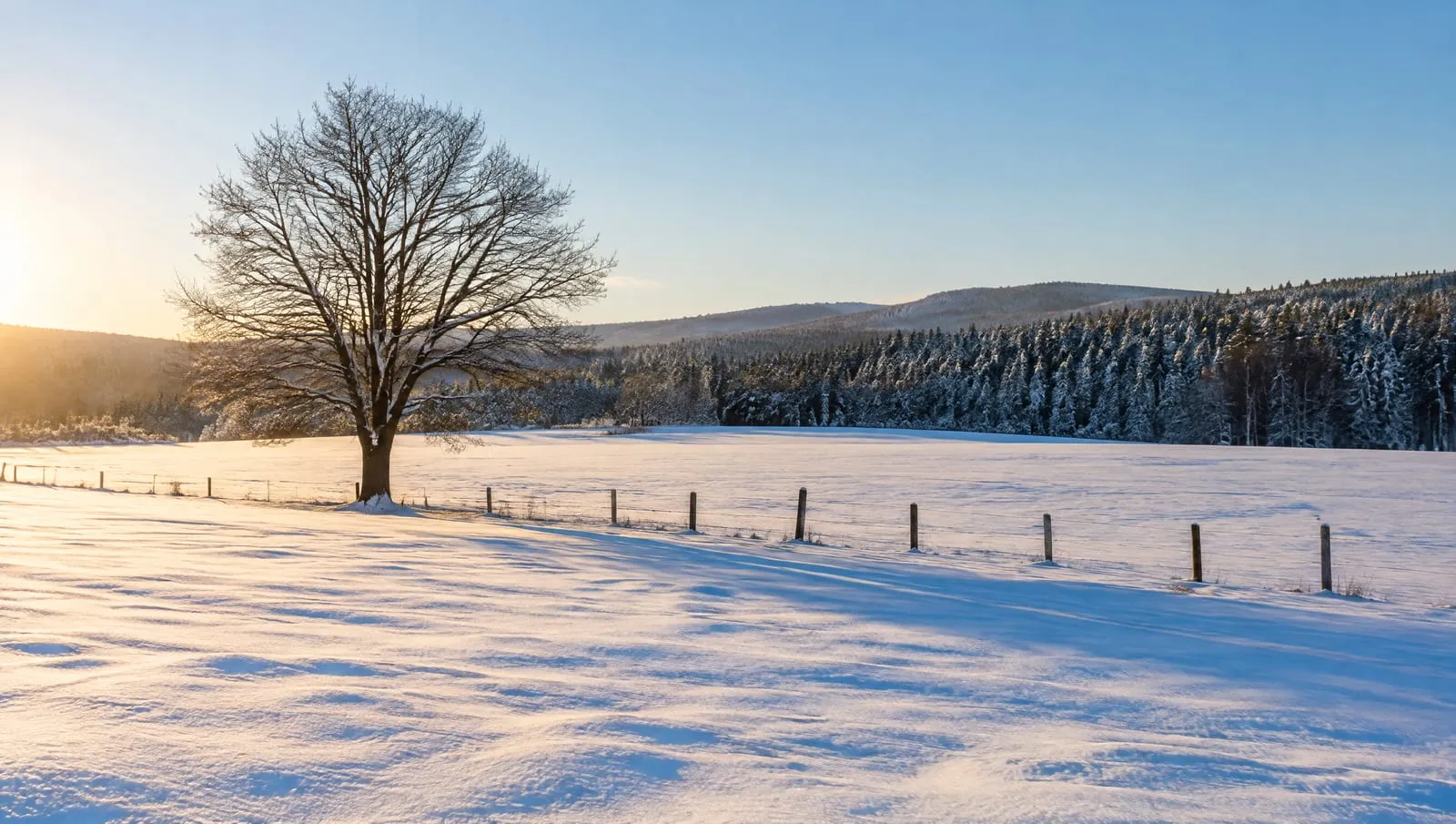
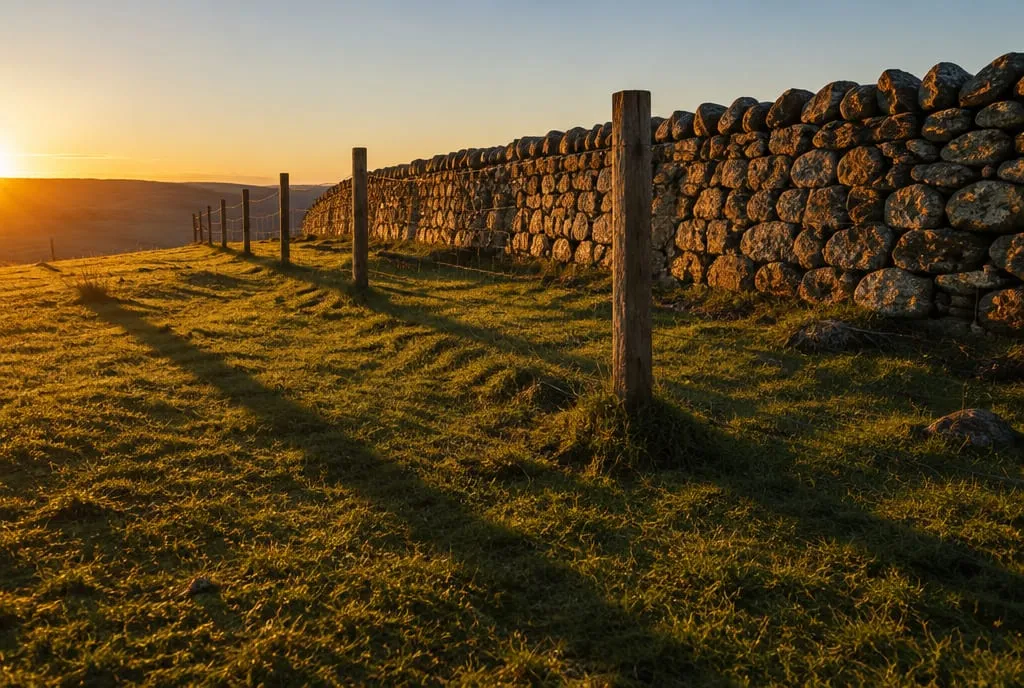 The clearest signal: shadows much longer than the objects casting them, and texture emerging where the light grazes a surface. Image generated to illustrate the concept, not a shot of a real place.
How do I expose with a low sun?
Protect the highlights and let the shadows come up later, so you keep detail in the sky and in the lit parts of the scene. Exposure is easy while the sun is outside the frame; it gets delicate when you include the sun or put it next to your subject.
- Check the histogram after every shot. If the data touches the right edge, highlights are blown and cannot be recovered; if it touches the left, shadows are clipped. With a low sun in the sky, the right edge is the more common risk.
- Underexpose slightly and recover shadows from RAW. Dark shadows can be lifted at the cost of some noise; a blown sky cannot be rebuilt.
- Expect less light than you think. As timeanddate notes, the sun is less bright, so you need a wider aperture or a higher ISO. If shutter speeds get long, a tripod keeps the image sharp.
- Shoot several exposures when contrast is extreme (sun in the sky and a shaded foreground): you can blend two or three in editing, or use a graduated filter.
- Shoot a lot. According to Adobe the light changes every minute, faster than you notice while shooting: carrying on after you “already have the shot” gives you more choice at home.
Where should I stand relative to the sun?
It depends on what you want to show: a low sun gives you all three main directions, and each makes a different photo. Turning ninety degrees changes the character of the shot without changing location.
| Direction | Where the light falls | Effect | Watch out for |
|---|---|---|---|
| Front (sun behind you) | On the face of the subject | Clean, warm color, easy exposure | Few shadows, so little volume |
| Side (sun to one side) | On one flank | Texture and form, long shadows | Shadows that swallow detail |
| Backlight (sun in front of you) | Behind the subject | Silhouettes, glowing edges, atmosphere | Exposure and flare in the lens |
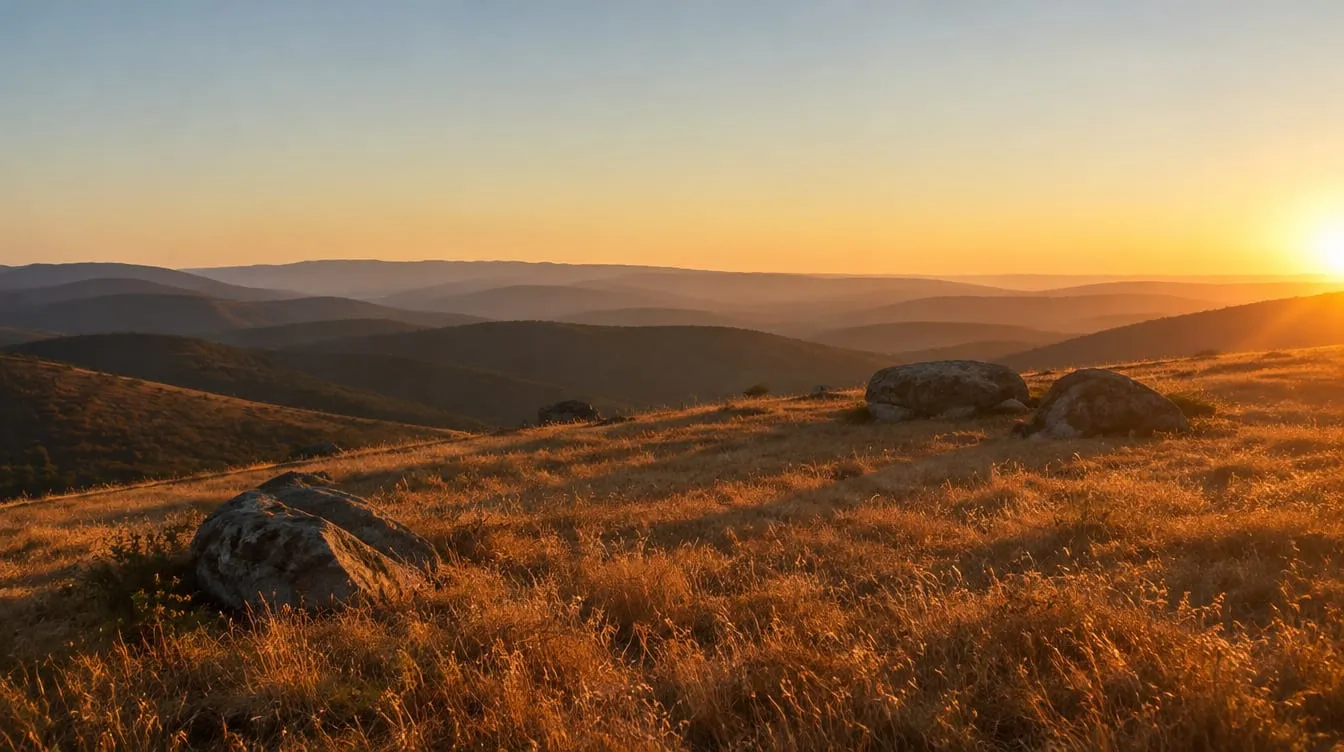
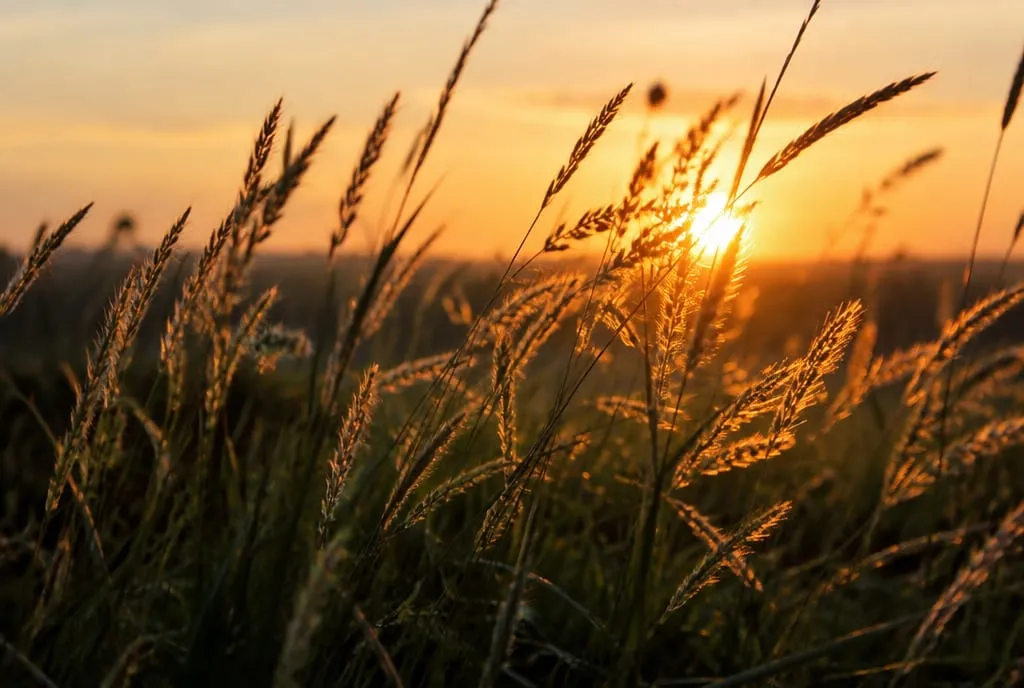 With a low sun, backlight lights up the edges (rim light) and leaves the foreground in shade, which is why exposure needs care. Image generated to illustrate the concept.
Side light rewards landscapes most because it reveals relief; if your photos look flat instead, check where the sun is relative to you: we cover it in why do my photos look flat. Backlight is the most spectacular and the easiest to get wrong. If the scene has a line or a path, raking light emphasizes it: see leading lines in photography. And because bright areas pull the eye, light also shifts the balance of your composition: we explain it in visual weight.
Should I keep the warm color or correct it?
Keep it, if it is why you raised the camera. Auto white balance tends to neutralize color casts, so a scene you saw as orange can come out duller. If you shoot RAW, white balance is not locked in and you choose it when developing; if you shoot JPEG, many guides suggest the Cloudy or Shade presets, which warm the image.
One check before overdoing it: compare highlights and shadows. At golden hour the highlights are warm and the shadows are often cooler, because they receive light from the sky. That color contrast gives depth: if you erase it with one warm tint over everything, you lose that very “air”. As a general rule, keep the tint that struck you and correct the one you had not noticed.
Sunrise or sunset: which golden hour should I pick?
Physically the light is very similar: what counts is the sun’s height and direction, not whether it is rising or setting. Pick the one that puts the sun where your composition needs it, because the sun rises and sets in nearly opposite directions. At sunrise you must be ready before the sun appears, often in the dark; either way, clouds can block the sun entirely, so keep a plan B (another angle, another subject).
How do I plan for golden hour?
Arrive early and know what you want to frame. The good light is short, and by then you have no time to choose a viewpoint.
- Check the sun’s height for your place and day with a calculator (timeanddate offers one that shows solar elevation).
- Scout the location or study it beforehand: where the sun rises or sets, what it will do to the shadows, which frames work.
- Arrive at least half an hour early to set up tripod, composition and settings.
- Stay after sunset. Adobe reminds us that blue hour follows, with a completely different mood.
On Framia, AI Planning builds a plan for your outing with light times, weather, compositions and shooting spots from what you want to photograph. Reading the light on location is still your job: no app knows whether the cloud in front of you will cover the sun ten minutes from now.
What to do next
An evening exercise to find your own golden-light threshold, with a single stationary subject (a tree, a wall, a post).
- Check the sunset time and arrive an hour and a half early. Pick a spot where you can photograph the same subject all evening.
- Every 15 minutes shoot the same subject from the same spot with the same lens, and look at your shadow: note how many times longer than you it is (by eye: 1×, 2×, 3×, 5× or more).
- For each shot write one word for the color (“white”, “yellowish”, “orange”) and whether the shadow has a sharp edge.
- At home, view the five or six shots as thumbnails and pick the one you like most. How long was your shadow? That is your threshold: from that value on, for you, the light works.
- Write the rule in one sentence (“with my shadow four times my height, the rock has shape and color”). Next time you leave the app in your bag and use that.
For a second opinion, upload your favorite shot to Framia and look at the light score, with an explanation of what works and what does not: compare it with your own reading. To see how a photo is judged across every criterion, read how to tell if a photo is good.
FAQ
What time is golden hour today?
There is no single time: it changes with the date and your location. Look up sunset for your town and work backward. The warm light starts to build before sunset, and a sun calculator such as the one on timeanddate.com shows when the sun drops below the height you choose, for example 6 degrees.
Does golden hour really last an hour?
Only as an approximation. According to timeanddate, the window from 6 degrees below to 6 degrees above the horizon takes about 50 minutes near the equator, about an hour at 40 degrees latitude in March, and over 90 minutes at 60 degrees in the same month. At high latitudes in summer it can stretch much longer.
Is there golden hour on a cloudy day?
The sun is still low, but clouds can block it completely, and then there is no warm direct light and the scene stays cool and flat. If the horizon is clear the sun can slip under the cloud bank and light the scene intensely, but you cannot know that in advance.
Can I get golden hour light at midday?
No, because warm, raking light depends on how low the sun is. At midday the sun is high, its rays cross less atmosphere and the light is more neutral and harder. You can imitate the color in editing, not the direction of the shadows.
Which white balance should I use at golden hour?
If you shoot RAW, any: you choose later while looking at the photo. If you shoot JPEG, auto white balance tends to cool the warmth you wanted, so try a warmer preset such as Cloudy or Shade and check the result on the screen.