Autofocus Modes Explained: When to Use Each
 by Marco Carotenuto · · 9 min read
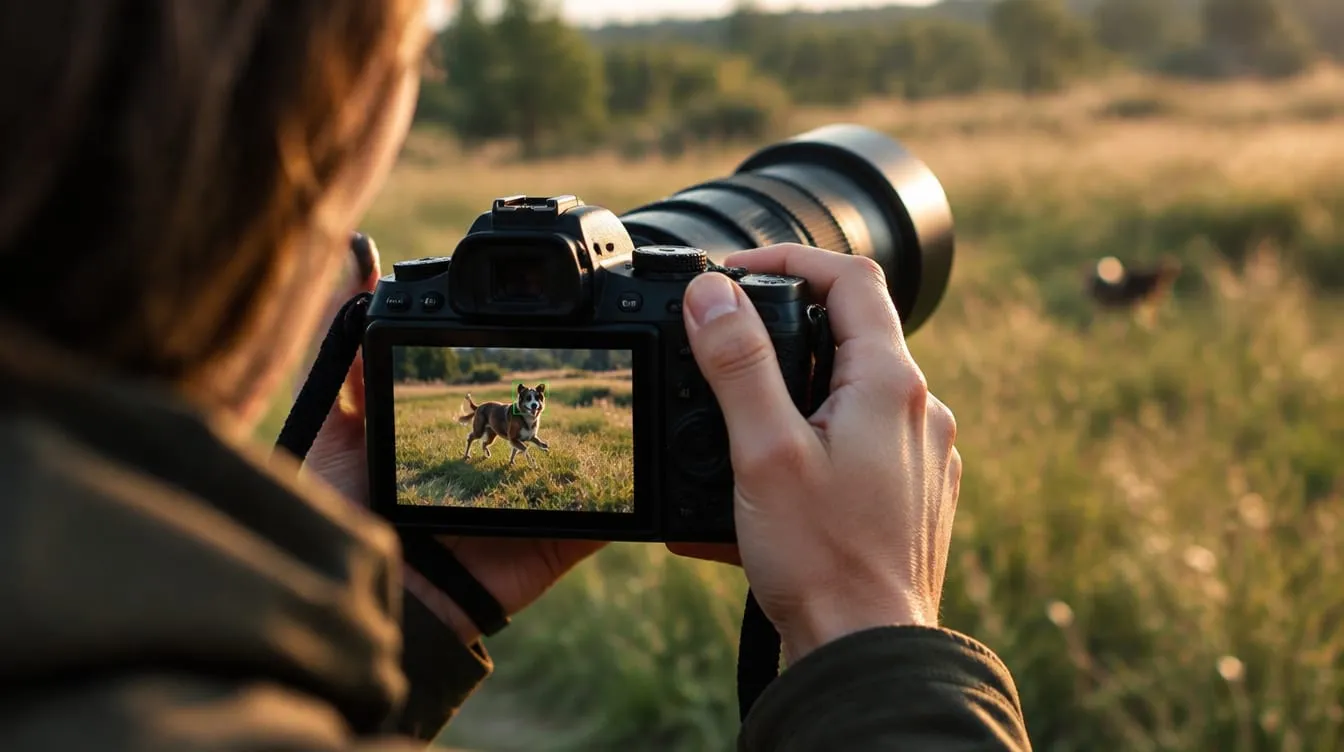
A photo can come out soft even with a fast shutter speed and a steady camera: focus landed in the wrong place, or arrived too late on a subject that was moving. Often it comes down to two settings many photographers never touch: the focus mode and the AF area.
This guide to autofocus modes explained without the jargon covers what AF-S, AF-C and AF-A actually do, how to choose the AF area, when manual focus is the better call, and a 20-minute test that shows you the difference in your own photos.
What is the difference between AF-S and AF-C?
AF-S focuses once and locks that distance; AF-C keeps adjusting focus for as long as you hold the button. It is the choice that matters most, and it is really a choice about your subject: still or moving.
- AF-S (Nikon, Sony, Fujifilm and others) or One-Shot AF (Canon). Half-press the shutter button, the camera focuses and stops there. If you or the subject move, focus stays put. According to Canon, as long as you keep the half-press, you can recompose without losing focus.
- AF-C or Servo AF (Canon; AI Servo on older models). The camera keeps focusing while you hold the button, and modern cameras also try to predict where the subject will be when the shutter opens.
There is a second, less obvious difference that explains a lot of “mysteriously” soft shots. Canon notes that in One-Shot the camera will not fire until it has focus, while Servo AF lets you fire even if the subject is not in focus yet. That makes sense for action, where the moment matters, but it means AF-C will not protect you from an out-of-focus frame. On many cameras, Nikon included, you can change this in the autofocus menu under an option along the lines of “priority selection” (release or focus).
Why does prediction matter? There is a short lag between pressing the button and the shutter opening, and Canon does the maths: in 100 milliseconds, someone walking at 5 km/h moves about 14 cm, which rarely hurts focus; a car at 200 km/h covers more than 5 metres, which throws the shot out of focus. That is why AF-S is not enough for fast subjects: it locks a distance that is already wrong a moment later.
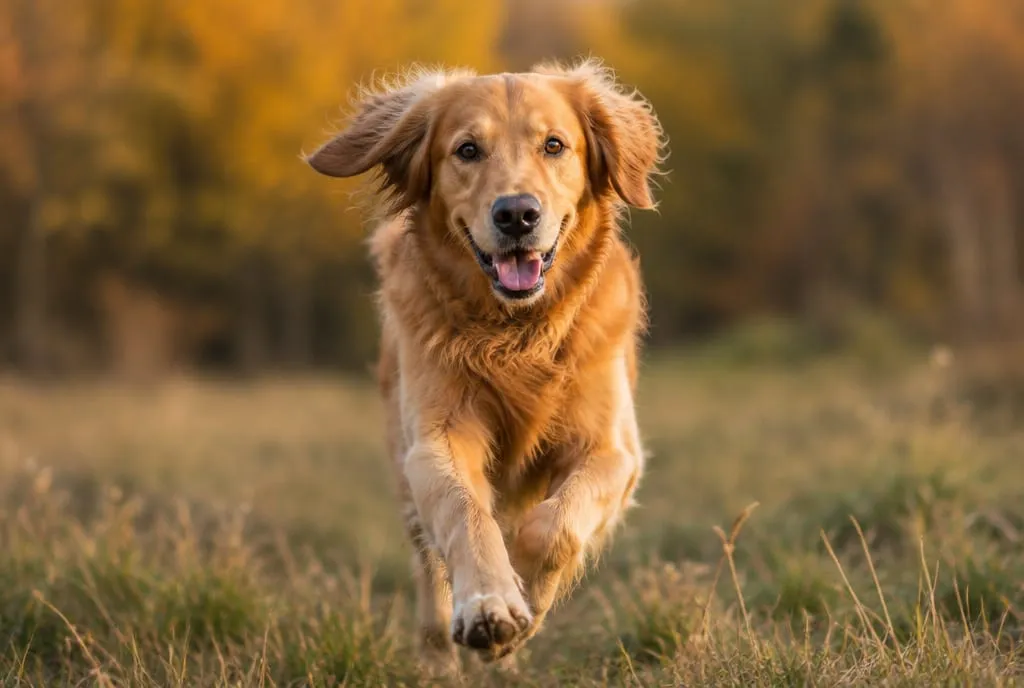 A subject running toward you changes distance every instant, which is exactly the case continuous focus was built for, and the eyes are the part that must stay sharp. AI-generated image to illustrate the concept.
What is AF-A for?
AF-A (AI Focus AF on Canon) picks between AF-S and AF-C for you: if it detects movement it switches to continuous, otherwise it stays on single. Handy, but Nikon School UK is upfront about its weakness: high-end cameras leave AF-A out because switching between the two modes can take a moment, and that moment can cost you the shot.
Not every camera offers it either. Photography Life notes it is most common on entry-level bodies, where it is often the factory setting.
Which autofocus mode should be my default?
Sources genuinely disagree here, and it is more useful to know that than to pretend there is one right answer.
- Canon recommends One-Shot when you are unsure, as a general-purpose setting for most subjects, and suggests AI Focus as a default if you mostly shoot landscapes, so you do not have to remember to switch when something fast turns up.
- The author of Photography Life does the opposite: he leaves his Nikons in AF-C almost all the time and only switches to AF-S when the camera cannot focus in low light.
- On forums portrait shooters split the same way: some use AF-S so the shutter only fires in focus, others prefer AF-C even for a posed subject because it absorbs small movements on both sides of the camera.
A practical tiebreaker: choose by which mistake costs you more. For landscapes and architecture, AF-S locked on a precise point is hard to beat. For kids, pets or sport, missing the moment costs more than refocusing, so AF-C is the baseline.
How do I choose an AF area mode?
The focus mode decides when the camera focuses; the AF area decides where. Names change from brand to brand, but they boil down to four families:
| AF area | Common names | When to use it |
|---|---|---|
| Single point | Single-point AF (Nikon), 1-point AF (Canon) | Still subjects where you pick the exact spot: landscape, architecture, posed portrait |
| Tiny point | Pinpoint AF (Nikon), Spot AF (Canon) | Very small details, like an insect; more precise but slower. On Nikon Z bodies, AF-S only |
| Dynamic or zone | Dynamic-area, wide-area (Nikon), AF point expansion, Flexible Zone AF (Canon) | Moving subjects that are hard to keep under a single point |
| Whole frame with detection | Auto-area AF (Nikon), Whole area AF (Canon) | When there is no time to place the point; recent models recognise faces, eyes, animals and, on some Canons, vehicles |
The descriptions come from Nikon’s Z-series support guide and Canon’s autofocus guide. One detail worth knowing: with a wide area the camera has to guess the subject, and Nikon says its wide-area modes give priority to the closest subject. If there is a branch or a railing in front, that may be what it picks.
 No blur from movement here: the hedge is sharp, so camera and subject were both still. Focus simply landed on the background instead of the cup. AI-generated image to illustrate the mistake.
That is the mistake in the image above, and you can tell it apart from camera shake precisely because part of the frame is sharp. For the full test that separates the two causes, see why are my photos blurry.
Which focus mode for landscapes, portraits and sport?
Here is a starting point for common situations, based on guidance from Nikon, Canon and Photography Life. It is not the only combination that works, just the one with the fewest surprises.
| Situation | Mode | AF area |
|---|---|---|
| Landscape, including on a tripod | AF-S / One-Shot | Single point on a contrasty element, or manual |
| Posed portrait | AF-S, or AF-C if the subject moves a little | Single point on the eye, or eye detection |
| Kids and pets at play | AF-C / Servo AF | Zone or whole area with subject detection |
| Sport, birds in flight | AF-C / Servo AF | Dynamic area or zone, or tracking |
| Street and candids | AF-A / AI Focus, or AF-C | Whole area with detection |
| Macro, night, low-contrast scenes | Manual, or AF-S on a contrasty point | Single point or spot |
In landscapes, focus goes hand in hand with aperture: where to focus when there is something close to the lens is a topic of its own, covered in foreground in landscape photography.
When should I use manual focus?
When autofocus does not have enough to work with, or when you already know where the subject will be. Autofocus relies on contrast: Photography Life uses the example of a blank white wall or a cloudless blue sky, where the camera hunts, tries again and eventually gives up.
The typical cases, as Sony and Nikon describe them in their guides:
- Macro, where depth of field can shrink to a few millimetres or less and you need to choose the exact plane yourself.
- Low light, such as a twilight shot with the camera on a tripod.
- Low-contrast subjects that are close in colour to the background.
- Predictable paths, like a car on a race track: prefocus on the spot it will pass.
Two aids make manual focus far easier on mirrorless cameras: magnifying the image on the screen or in the viewfinder, and focus peaking, which highlights in-focus edges in colour. Either way, you judge sharpness on a large view, not a thumbnail.
Can I focus and recompose?
Yes, in AF-S: hold the half-press, move the frame, take the shot. It is quick, and Canon presents it as a practical way to lock focus. The limit shows with very wide apertures and close subjects: when you swing the camera, the plane of focus swings with it and can end up slightly in front of or behind the eye you chose. In those cases, move the AF point onto the subject instead of recomposing.
In AF-C the technique does not work at all: as soon as you move the frame, the camera refocuses on whatever is now under the AF point.
What to do next
A 20-minute test with a willing friend (or a dog that comes when called) to see how the modes differ in your own shots.
- Set the scene. Have your friend start about ten metres away and walk toward you at a normal pace. Use your lens’s widest aperture so depth of field is shallow and mistakes are easy to see.
- Rule out blur. Set at least 1/500 s and raise ISO as needed: this test should measure focus only. If balancing the three settings is still fuzzy, revisit the exposure triangle.
- First series in AF-S. Single point on the face, focus as your friend starts walking and hold the half-press; then shoot a burst as they approach, without letting go.
- Second series in AF-C, same point, same walk, keeping the point on the face the whole time.
- Third series in AF-A or AI Focus, if your camera has it. If not, repeat AF-C using the whole area with eye detection.
- Check every frame at 100%, looking at the eyes. In AF-S you should see focus stay at the starting distance while the face comes closer; count how many frames per series have sharp eyes. To get through a lot of frames quickly, use the passes in how to cull travel photos.
By the end you will know which combination works with your camera and your way of following a subject. If you want an outside opinion on a shot, upload it to Framia: the Technique category gives you a score and an explanation that help you see whether sharpness is the weak spot.
FAQ
Why won't my camera take the picture when I press the shutter?
You are probably in AF-S (One-Shot on Canon) and the camera cannot find focus. By default, that mode only releases the shutter once focus is confirmed. Aim at an area with more contrast, check you are not closer than the lens's minimum focus distance, or switch to manual. On many cameras you can change this priority in the autofocus menu.
Do I set the focus mode on the lens or on the camera?
Usually both, for different things. The AF/MF switch on the lens, if there is one, turns autofocus on or off; the mode (AF-S, AF-C, AF-A) and the AF area are set on the camera, with a dedicated button or in the menu depending on the model. If autofocus does nothing at all, check that lens switch first.
Can I use autofocus at night or in low light?
Yes, but it is less reliable: autofocus needs contrast, and low light offers less of it. Aim at a lit edge or a distant light, use a single point in AF-S, and if the camera keeps hunting, switch to manual focus and magnify the image on the screen.
Should I focus with the shutter button or a back button?
It depends on how you work. Many cameras have an AF-ON button and let you remove autofocus from the shutter button, so you decide separately when to focus and when to shoot. In AF-C, letting go of AF-ON leaves focus where it was, so you effectively get continuous and locked focus under the same thumb. It takes some practice, and the setup varies by model: check your manual.